Luxshare Precision Tests Investor Appetite for a Potential $3 Billion Hong Kong IPO
Keywords: Luxshare Precision, Hong Kong IPO, investor education, dual listing, electronics manufacturing, capital markets, valuation, supply chain, ChiNext, fundraising
Introduction
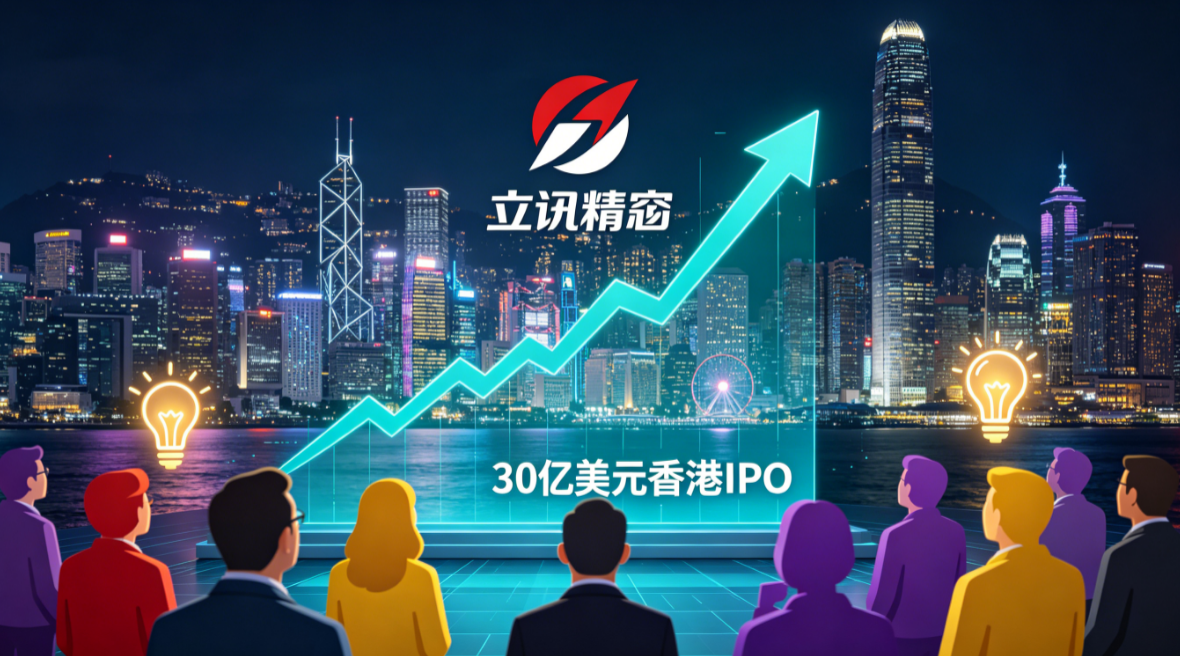
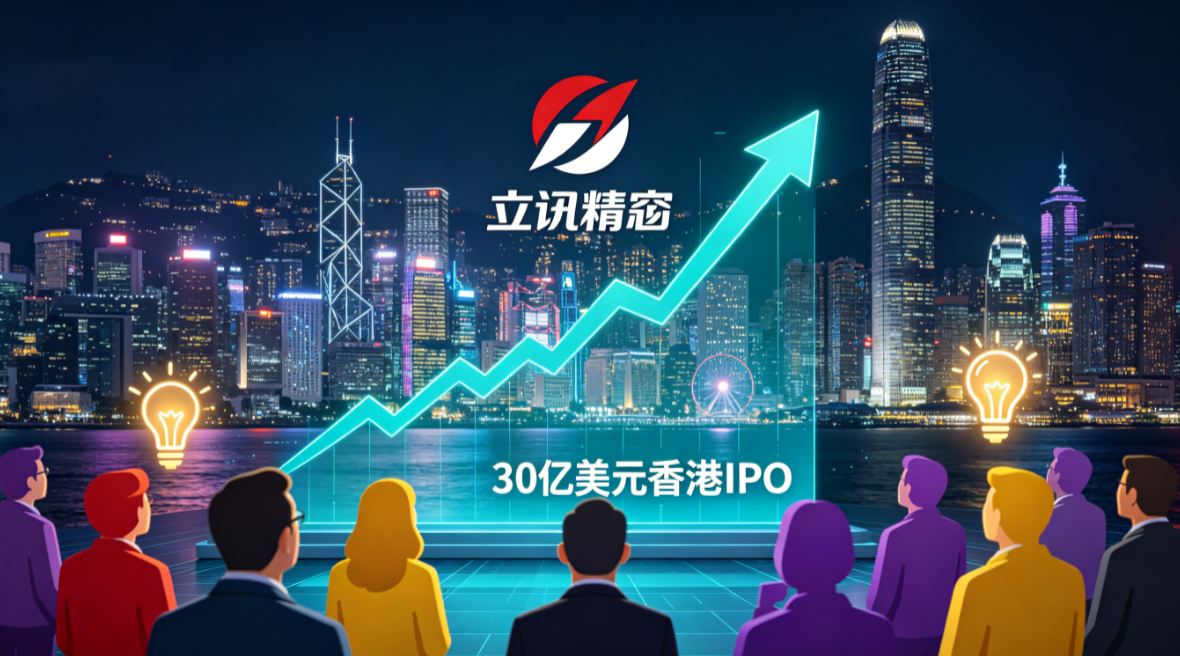
Luxshare Precision Industry Co., a major Chinese electronics manufacturing and component supplier, has reportedly begun sounding out investor interest for a Hong Kong listing that could raise about $3 billion. If completed, the deal would likely rank among the largest Hong Kong IPOs of the year and would mark another significant step in the company’s capital-markets strategy.
The timing is notable. Over the past 12 months, Luxshare’s Shenzhen-listed shares have more than doubled, lifting its market capitalization to roughly $77 billion. That performance has improved its equity currency, broadened institutional attention, and created a favorable backdrop for a cross-border capital raise. Yet the move is not simply about valuation momentum. It also reflects a broader strategic objective: strengthening funding flexibility, diversifying the shareholder base, and enhancing global visibility at a time when supply chains, manufacturing footprints, and customer relationships are all under renewed scrutiny.
Why Hong Kong, and Why Now?
From a capital-markets perspective, Hong Kong remains the most natural offshore venue for mainland industrial companies seeking international funding without abandoning their domestic listing base. For a company like Luxshare, which sits at the intersection of consumer electronics, precision manufacturing, and high-volume supply-chain integration, Hong Kong offers access to global long-only funds, sovereign accounts, and sector-specialist investors who can better benchmark the firm against peers in Asia and beyond.
A Hong Kong listing also has practical advantages. It can provide an additional liquidity pool, potentially improve trading depth, and create optionality for future acquisitions or overseas expansion. In sectors where technological upgrading and customer concentration matter, a strong capital base can be as important as operating margin. For Luxshare, which has built scale through manufacturing excellence and vertical integration, the ability to finance future capacity, automation, and product diversification could prove valuable.
The company’s share-price rally in Shenzhen is also relevant from a technical issuance standpoint. A rising market capitalization generally supports a more efficient price discovery process for a secondary listing or share sale. It can reduce dilution pressure relative to proceeds raised and may allow management to calibrate valuation expectations more confidently. At the same time, a strong stock price does not eliminate execution risk; it simply improves the starting point for negotiations with institutional investors.
What a $3 Billion Deal Signals
A deal of this size would not be a routine listing. In Hong Kong, a $3 billion IPO would signal both scale and ambition, and it would likely attract large benchmark funds as well as strategic cross-over investors. For Luxshare, the offering would effectively communicate that the company is not raising money out of distress, but out of confidence in its long-term growth pathway.
In practical terms, proceeds from such an IPO could be directed toward several priorities: expanding manufacturing capacity, funding R&D for higher-value components, supporting overseas operational footprints, or reinforcing the balance sheet. In a sector characterized by tight margins and rapid technological change, these uses matter. Precision manufacturing is increasingly about process control, yield improvement, material science, and automation—not just labor arbitrage.
The issue could also sharpen market scrutiny of Luxshare’s business mix. Investors will likely examine customer concentration, product diversification, and exposure to major device cycles. As a supplier tied to large technology platforms, the company benefits from scale and ecosystem embedding, but it also faces the classic risk of dependence on a handful of very large buyers. That makes disclosure quality and forward-looking capital-allocation discipline especially important.
Underwriters and Market Significance
According to the reference information, CICC, Goldman Sachs, and Citic Securities are leading the Hong Kong listing work. That syndicate composition is meaningful. It combines deep access to mainland capital markets, international placement capabilities, and strong institutional distribution networks. For a transaction expected to draw a broad base of global investors, that blend can be critical in building book depth and stabilizing pricing.
The involvement of top-tier underwriters also suggests that Luxshare’s potential listing is being positioned as a flagship deal rather than a purely financial exercise. The market will likely interpret the transaction as a signal of confidence in Chinese advanced manufacturing and in companies that have demonstrated resilience through multiple industry cycles.
At the same time, Hong Kong’s IPO market has become increasingly selective. Investors have shown greater sensitivity to profitability quality, free cash flow, and valuation discipline. That means a successful launch would depend not only on brand recognition and size, but on a coherent equity story: how the company compounds returns, how it manages customer and geographic concentration, and how it translates scale into durable operating leverage.
Key Risks to Watch
Despite the positive setup, several risks deserve attention. First is valuation. A strong domestic rally can create optimism, but cross-border investors may demand a discount if they perceive earnings growth as cyclical rather than structural. Second is execution. Large manufacturing groups must convince the market that incremental capital will generate returns above the cost of capital, especially in a more cautious global macro environment.
Third is external exposure. Electronics supply chains are sensitive to trade policy, geopolitical friction, and shifts in end-market demand. Even high-quality manufacturers can experience margin volatility when pricing power weakens or customers adjust inventory cycles. Finally, liquidity conditions in Hong Kong remain uneven, so timing and deal structure will matter. A well-anchored book can support pricing, but a weak macro tape can quickly compress demand.
Conclusion
Luxshare Precision’s reported exploration of investor interest for a Hong Kong IPO is more than a fundraising headline. It reflects a mature industrial company using capital markets to reinforce strategic flexibility, broaden its investor base, and potentially unlock additional value from its operating platform. With a possible $3 billion raise, the transaction could become one of Hong Kong’s most significant listings of the year.
Whether the deal succeeds will depend on more than market enthusiasm. Investors will want evidence of sustained earnings quality, disciplined capital deployment, and a credible path from manufacturing scale to long-term shareholder returns. If Luxshare can deliver that narrative, the Hong Kong listing may become a landmark event not only for the company, but for the broader re-rating of China’s advanced manufacturing sector.