RCEP Policy Fuels Rapid Growth of Cross-border Chemical and Bulk Commodity Logistics
Introduction
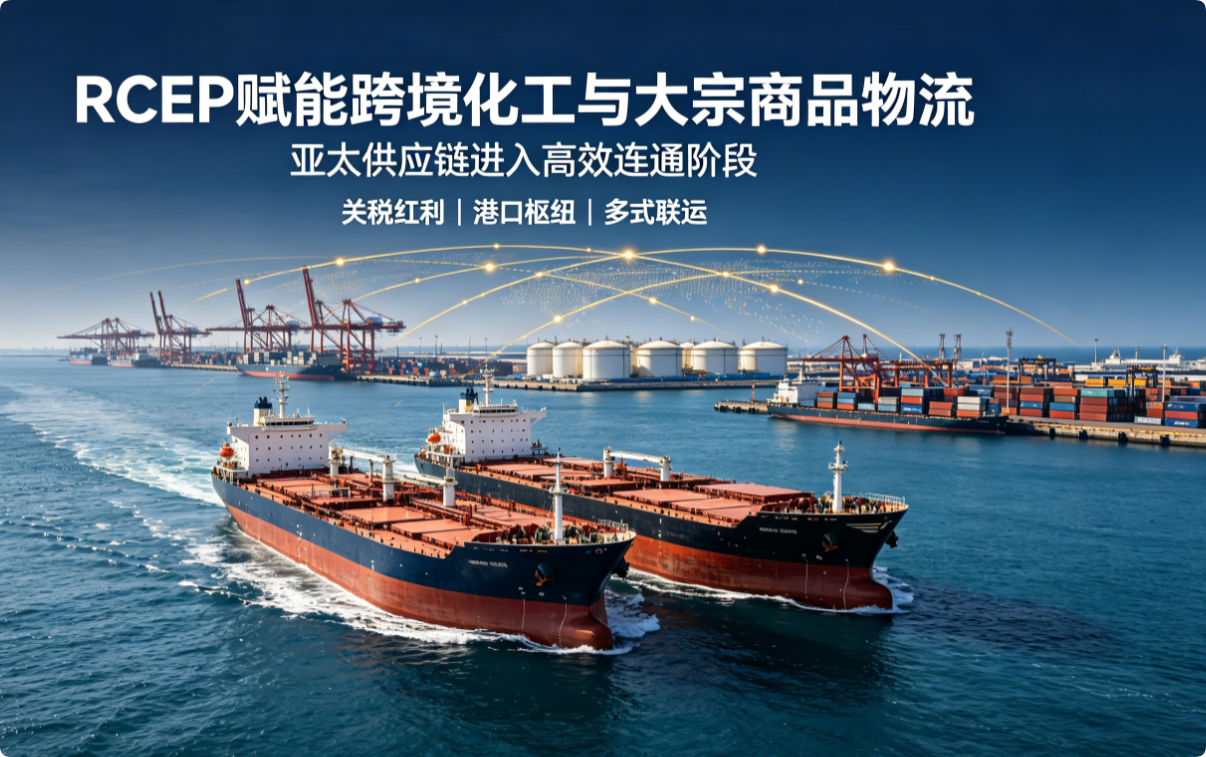
Since the Regional Comprehensive Economic Partnership (RCEP) entered into full force, a series of policies including tariff reduction, cumulative rules of origin and customs clearance facilitation have continuously dismantled regional trade barriers and reshaped the industrial chain division among China, ASEAN, Japan, South Korea and other member states. Benefiting from policy dividends, the import and export volume of fine chemicals, energy, mineral and agricultural bulk commodities between China and regional partners has maintained steady growth. The sea-land multimodal transport network has been constantly improved, while professional hazardous chemical logistics and bulk commodity warehousing & transshipment systems have taken shape at an accelerated pace. The collaborative capacity of regional supply chains keeps rising, unlocking new growth opportunities for the foreign trade logistics sector.
I. Significant Tariff Cuts Lower Comprehensive Logistics Costs for Cross-border Trade
After RCEP took effect, more than 90% of chemical products, energy and mineral bulk commodities within the region enjoy phased tariff reductions and eventually zero tariffs. Enterprises can obtain preferential tariff treatment with RCEP certificates of origin, directly boosting foreign trade profits and cutting overall logistics expenses.
In terms of fine chemical products, export tariffs on PVC additives, coatings, lithium battery electrolytes and other raw materials shipped from China to Vietnam and Thailand have been gradually reduced from 5%–15% to zero, enabling enterprises to save up to hundreds of thousands of US dollars in tariffs per shipment. For bulk commodities such as palm oil, natural rubber, coal and iron ore imported from ASEAN, comprehensive import costs have fallen by 5% to 20% under RCEP tariff incentives.
In addition, the RCEP cumulative rule of origin breaks the restriction that value-added components must be generated in a single country. Many chemical enterprises integrate raw materials from Japan and South Korea, energy resources from ASEAN and deep-processing capacity in China. The cross-border circulation of intermediate chemical products and semi-finished goods has surged, driving strong demand for short-sea feeder shipping, bonded warehousing and cross-regional distribution. Back-to-back certificates of origin have matured into a mainstream tool for re-export trade, greatly promoting the development of cross-border transit logistics.
II. Interconnected Land and Sea Corridors Build Diversified Cross-border Logistics Systems
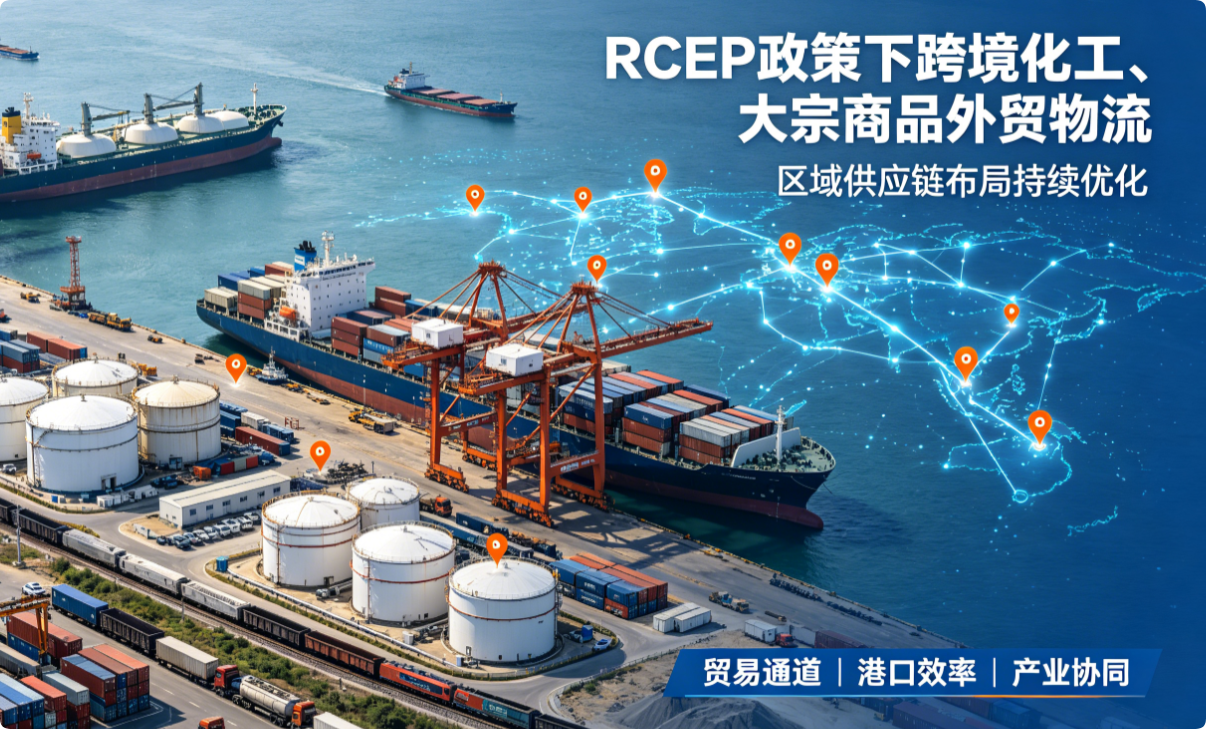
Driven by booming RCEP trade, the New International Land-Sea Trade Corridor, China-Laos Railway, Pan-Asia Railway and the Guangdong-Hong Kong-Macao Greater Bay Area port cluster have jointly formed a three-dimensional logistics network combining sea, rail, river and highway transport, ending over-reliance on traditional long-distance ocean shipping.
Major ports including Shanghai, Ningbo, Shenzhen and Qinzhou have launched numerous weekly short-sea routes to Vietnam, Thailand, Singapore and Indonesia. Shipping companies have deployed eco-friendly chemical tankers and bulk carriers to meet the specialized transport demands of hazardous chemicals, coal, grain and mineral products, cutting regional transit time by more than 30% compared with five years ago.
Rail-sea intermodal transport stands out for its high efficiency. It only takes 3 days to deliver chemical raw materials and mechanical equipment from inland southwest China to Laos and Thailand via the China-Laos Railway, saving more than one week versus sea freight. Regular cross-border freight trains along the New International Land-Sea Trade Corridor have opened a vital gateway for inland bulk commodity exports. Meanwhile, paperless customs declaration, pre-arrival filing and single-window data sharing have streamlined inspection and quarantine procedures, greatly shortening cargo dwell time at ports and enabling full-lifecycle cargo tracking.
III. Industrial Relocation Drives Logistics Upgrading and Boosts Specialized Warehousing Services
RCEP has accelerated industrial relocation toward ASEAN countries. A large number of chemical industrial parks have been built in Vietnam, Thailand and Indonesia, generating two-way trade demand: these nations import fine chemicals and new materials from China while exporting oil & gas, rubber and palm oil.
Unlike general cargo, chemical products feature flammability, explosiveness and corrosiveness, and bulk commodities require large-scale bonded yards, temperature-controlled storage and bulk handling facilities. These requirements have pushed the logistics industry toward specialization, compliance and decarbonization. Specialized hazardous chemical warehouses, bulk cargo transshipment bases and chemical tank storage zones have been constructed across the region, turning Singapore, Hong Kong and Qinzhou into key regional distribution hubs. Integrated supply chain services including bonded warehousing, repackaging and cross-border distribution have achieved rapid development.
Compliance thresholds have also been raised. Carriers holding international certifications such as CDI and SQAS gain obvious competitive advantages. Ageing high-emission vessels are being phased out, replaced by green ships complying with the IMO CII carbon intensity rules, which also qualify enterprises for port incentives and shipping tax preferences.
IV. Existing Challenges: Inconsistent Standards, Port Congestion and Uneven Infrastructure
Despite robust growth, cross-border chemical and bulk commodity logistics under RCEP still face multiple constraints. First, ASEAN countries adopt disparate regulatory standards for chemical imports, with complex certification requirements such as SDS safety data sheets often leading to cargo detention or return shipments. Second, frequent port congestion in Ho Chi Minh and Bangkok has prolonged inspection cycles for chemical and bulk goods. Third, inland nations including Laos and Myanmar lack mature warehousing and highway infrastructure, creating bottlenecks in the inland segment of intermodal transport. Fourth, specialized chemical tonnage remains in short supply during peak seasons, pushing up freight rates.
V. Industry Outlook: Integrated, Smart and Low-carbon Logistics Will Lead Future Development
With the continuous advancement of the upgraded China-ASEAN Free Trade Area 3.0, RCEP policy dividends will be further unleashed. The sector will embrace three major trends in the coming years:
First, regional port collaboration will be deepened via combined-port customs clearance, integrating route, terminal and warehousing resources to build world-class transshipment hubs for chemicals and bulk commodities.
Second, logistics providers will evolve from simple carriers into comprehensive supply chain service suppliers, covering customs brokerage, bonded storage, international shipping and trade finance to accommodate large-volume, long-cycle cross-border commodity trade.
Third, digital smart ports, AI yard scheduling and end-to-end cold chain traceability will be widely adopted, alongside massive deployment of low-carbon bulk and chemical vessels. Mutual recognition of regional logistics standards under RCEP will gradually eliminate cross-border compliance barriers.
Supported by institutional dividends, industrial integration across the Asia-Pacific will continue to deepen. The sophisticated, multi-modal and eco-friendly cross-border logistics network will underpin high-quality regional economic and trade cooperation.