Title: Apple’s iPhone 18 Pro Leak Exposes the Fragility of a Global Supply Chain
Keywords: Apple, iPhone 18 Pro, Tata Electronics, data leak, supply chain security, India manufacturing, World Leaks, smartphone industry, confidential files, contract manufacturing
Article:
Introduction
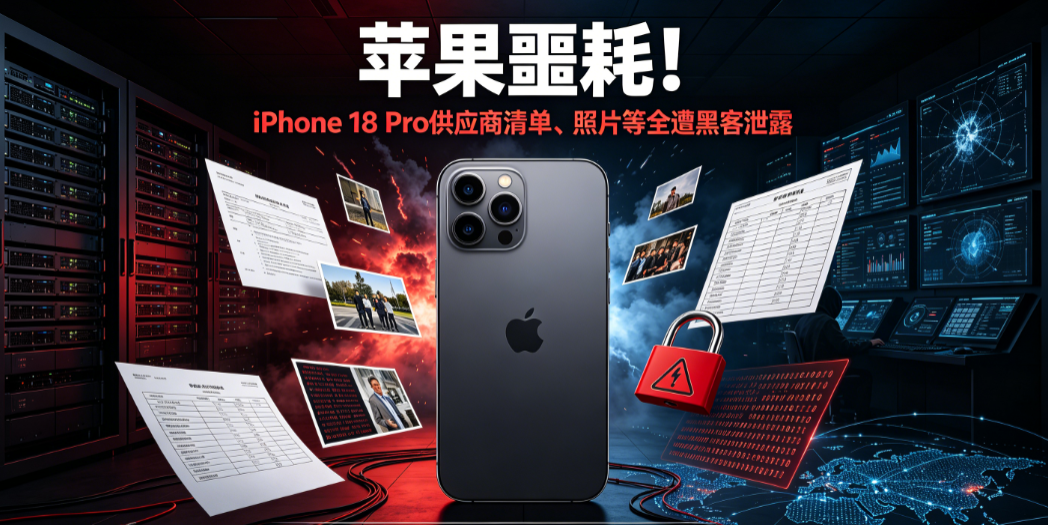
A major data leak involving Apple’s supply chain has raised fresh concerns about the security of sensitive manufacturing information and the resilience of the company’s global production network. According to reports, a ransomware group published confidential files on the dark web after stealing them from Tata Electronics, one of Apple’s key suppliers in India. The leaked materials allegedly include component lists, supplier mappings, and photos related to the unreleased iPhone 18 Pro models.
While Apple has long relied on secrecy as a competitive advantage, this incident highlights a broader vulnerability: the more distributed and complex the company’s manufacturing ecosystem becomes, the harder it is to protect. Beyond the immediate concern of leaked product details, the event could affect Apple’s relationships with suppliers, its pricing strategy, and its efforts to diversify production away from China.
A Leak That Goes Beyond Product Details
The compromised files reportedly contain detailed references to hundreds of components for the upcoming iPhone 18 Pro and iPhone 18 Pro Max, including chips on the main circuit board, battery modules, and camera parts. In some cases, the documents appear to link specific suppliers to particular components, revealing how Apple sources critical parts and where it depends on a limited number of vendors.
This kind of information is highly sensitive. For Apple, supplier relationships are not just operational details; they are a core part of its strategic advantage. By controlling the flow of information about who manufactures what, Apple can maintain leverage in negotiations, protect its product roadmap, and limit competitive intelligence. Once that information enters the public domain, even through an illegal leak, the company’s bargaining position becomes weaker.
Reports also indicate that some files were marked with Apple’s “confidential” watermark and used internal codenames consistent with the iPhone 18 Pro family. In addition, images dated early 2026 reportedly show a gray iPhone undergoing drop tests at a Tata Electronics facility. The device is said to feature a triple-camera rear setup and Apple branding, suggesting that the leak may have exposed not only component data but also early-stage testing details.
Why Tata Electronics Matters to Apple’s Strategy
Tata Electronics has become one of Apple’s most important manufacturing partners outside China. The company plays a dual role: it supplies components and also assembles iPhones under contract. This makes Tata a central pillar in Apple’s effort to diversify production across geographies.
That strategy is tied closely to India’s ambitions as well. Prime Minister Narendra Modi’s government has positioned electronics manufacturing as a key industrial priority, and Apple’s expansion in the country has become a flagship example of that vision. Industry data suggests that India is on track to account for a significant share of global iPhone production, a dramatic increase from only a few years ago.
But the leak shows that diversification comes with risk. As production shifts across borders and partners, oversight becomes more difficult, and the number of access points to sensitive information multiplies. The incident could force Apple to reassess how it manages confidential data across its supplier base, particularly in fast-growing manufacturing hubs where internal controls may still be evolving.
Implications for Apple’s Business and Pricing Power
The timing of the leak is especially challenging for Apple. The company has already faced margin pressure from rising memory and storage chip costs, leading to recent price increases for some iPad and MacBook models. Analysts also expect that iPhone prices may rise in the coming months as component costs remain elevated.
Against this backdrop, any disruption to supply chain stability could be costly. Leaked component allocations and supplier dependencies may give rivals, counterfeiters, and even other Apple vendors greater visibility into Apple’s procurement structure. In an industry where speed, secrecy, and precision are essential, such exposure can undermine both operational efficiency and product differentiation.
There is also a reputational dimension. Consumers may not follow supplier data leaks closely, but they do care about innovation, security, and product reliability. If Apple is perceived as unable to fully protect pre-launch information, the company risks weakening the aura of exclusivity that has long surrounded its flagship devices.
A Broader Security Problem for Global Manufacturing
The Tata Electronics incident is not just an Apple problem; it is a warning for the broader electronics industry. Modern hardware production depends on highly interconnected networks of design firms, component makers, logistics providers, and assemblers. Each link in that chain creates a potential point of exposure.
Ransomware groups have increasingly targeted industrial suppliers because they often hold valuable technical documents but may not have the same cybersecurity defenses as the brands they serve. In this case, the leaked materials reportedly included more than 200,000 files, some of which were tied to Apple, Tesla, TSMC, and Qualcomm. That breadth illustrates how one breach can ripple across multiple sectors.
For multinational firms, the lesson is clear: supply chain security must be treated as seriously as product security. Confidentiality cannot rely solely on legal agreements or limited access policies. It requires continuous monitoring, stronger encryption, compartmentalization of information, and closer coordination with third-party vendors.
Apple’s Response and the Road Ahead
Apple is reportedly investigating the incident and working with Tata Electronics on a long-term response. Tata has restricted internal access to sensitive systems and brought in a global consulting firm to conduct forensic analysis. These steps may help contain the damage, but they cannot fully reverse the consequences of leaked information already circulating online.
The key challenge for Apple will be restoring trust without slowing the pace of its supply chain diversification. India remains strategically important to the company, both as a manufacturing base and as a growth market. Yet the leak may prompt Apple to tighten controls, revise supplier protocols, and impose stricter requirements on partners handling unreleased product data.
Conclusion
The alleged leak of iPhone 18 Pro files is more than a headline-grabbing cybersecurity incident. It exposes the tension at the heart of Apple’s modern manufacturing strategy: global scale brings efficiency and resilience, but it also increases complexity and risk. As Apple continues to expand production beyond China, its ability to protect sensitive information will become just as important as its ability to design world-class products.
For Apple, Tata Electronics, and the broader technology industry, this case serves as a reminder that in the age of interconnected supply chains, confidentiality is no longer a back-office concern. It is a strategic necessity.