Accelerated Sector Rotation in Hong Kong Stocks: Seizing Investment Opportunities in Technology and Energy Dual Mainlines for August
As August enters its second half, the Hong Kong stock market has shown significant sector rotation characteristics, with technology and energy sectors emerging as dual mainlines driving market performance. In this round of market volatility, how can investors capitalize on the investment opportunities brought by sector rotation? This article will conduct an in-depth analysis of current sector rotation features in Hong Kong stocks, interpret the underlying logic behind the strength of technology and energy sectors, and explore how investors can formulate effective investment strategies in this rotating environment.
1. Analysis of Sector Rotation Characteristics in Hong Kong Stock Market
Recently, sector rotation in the Hong Kong stock market has significantly accelerated, showing several notable features:
- Increasing divergence between sectors: Technology and energy sectors have shown strong performance, while traditional consumption and real estate sectors have relatively underperformed;
- Concentrated capital flows: Southbound funds continue to flow into high-growth sectors, particularly in technology and energy;
- Obvious policy catalytic effects: Changes in domestic and foreign policies have differentiated impacts on different sectors;
- Diverging earnings expectations: Mid-year reports have become important catalysts for sector performance, with sectors exceeding expectations attracting capital favor.
The Hang Seng Index has shown a volatile upward trend in August, with sector rotation becoming the market's main theme. From a technical analysis perspective, the Hang Seng Index has formed support around the 24,000-point mark, with market confidence gradually recovering. In this context, sector rotation not only reflects changes in market sentiment but also reveals the reassessment of different industry prospects by capital.
2. Technology Sector: Technology Wave Led by AI and Semiconductors
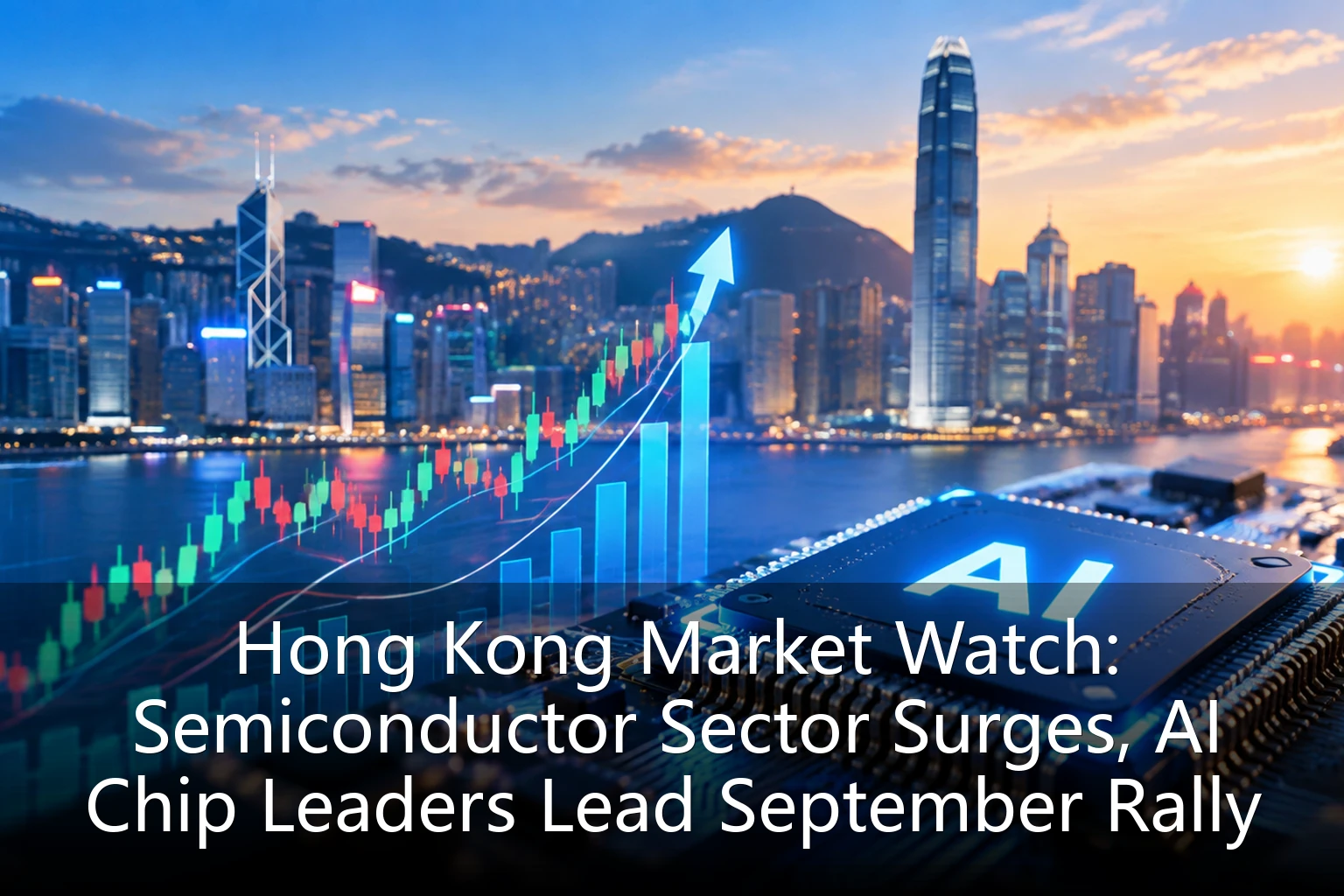
The technology sector has become the main highlight of the Hong Kong stock market in August, with artificial intelligence (AI) and semiconductor chains showing particularly outstanding performance. The arrival of the earnings season for global tech giants has provided strong upward momentum for Hong Kong tech stocks.
1. AI Industry Chain Experiences Double Boost
After a period of adjustment, the AI industry chain has recently seen dual improvements in valuation and performance. On one hand, global AI application scenarios continue to expand, with market demand growing steadily; on the other hand, demand for infrastructure such as AI servers and computing power chips has surged, leading to significant upward revisions in earnings expectations for related listed companies.
From an industry chain perspective, the AI industry chain can be divided into three levels: upstream computing infrastructure, midstream AI algorithms and models, and downstream AI applications. Among them, upstream computing infrastructure includes AI servers, GPU chips, etc.; midstream includes AI large model development; downstream covers AI applications in various industries. Currently, the AI industry chain in the Hong Kong market is mainly concentrated in the upstream and midstream sectors, such as semiconductor design and server manufacturing.
2. Semiconductor Industry Expects Cyclical Recovery
As a core component of the technology sector, the semiconductor industry has shown clear signs of recovery recently. The year-on-year growth rate of global semiconductor sales has turned from negative to positive, the industry inventory cycle has entered a downward channel, and prices have gradually stabilized. Meanwhile, growing demand for chips from emerging applications such as AI, IoT, and 5G has provided long-term growth momentum for the semiconductor industry.
In the Hong Kong semiconductor sector, design companies, manufacturing companies, packaging and testing companies, and equipment/material companies have all shown performance. Among them, AI chip design companies have particularly bright performance due to benefiting from the growth in demand for AI large model training and inference. Additionally, as the domestic substitution process accelerates, the valuation of domestic semiconductor design companies in the Hong Kong market has gradually increased.
3. Energy Sector: Investment Opportunities from Reshaped Supply-Demand Structure
Corresponding with the technology sector, the energy sector has also shown strong performance in August, becoming another mainline driving the Hong Kong market. The strength of the energy sector mainly stems from the reshaping of the global energy supply-demand structure and geopolitical factors.
1. Dual-wheel Drive of Policy and Market in New Energy Sector
The new energy sector includes multiple sub-sectors such as new energy power generation, new energy vehicles, and energy storage. Recently, many governments have introduced new energy support policies, including increasing the proportion of renewable energy and increasing subsidies for new energy vehicles, providing policy dividends for the new energy sector. At the same time, with technological progress and economies of scale, the cost of new energy power generation continues to decline, enhancing market competitiveness.
In the Hong Kong new energy sector, new energy operators, energy storage equipment manufacturers, and new energy vehicle chains have all shown performance. Especially with the acceleration of the global carbon neutrality process, the long-term growth of new energy operators has been recognized by the market, with valuations gradually increasing.
2. Structural Opportunities in Traditional Energy Sector
The traditional energy sector includes oil, natural gas, coal, etc. Recently, significant changes have occurred in the global energy supply-demand structure. On one hand, geopolitical factors have increased uncertainty in energy supply; on the other hand, traditional energy will still play an important role in the energy transition process. These changes in the supply-demand structure have brought structural opportunities to the traditional energy sector.
In the Hong Kong traditional energy sector, oil and gas companies with resource advantages have shown particularly outstanding performance. These companies not only benefit from rising energy prices but also return to shareholders through dividends and buybacks, having high investment value. Additionally, during the energy transition, the expansion of traditional energy companies into new energy fields has also provided room for market imagination.
4. Analysis of Capital Flows and Market Sentiment
As an important force in the Hong Kong stock market, changes in the flow direction of southbound funds often indicate the direction of market sector rotation. Recently, southbound funds have continued to flow into technology and energy sectors while flowing out of traditional consumption and real estate sectors, reflecting the market's reassessment of different industry prospects.
Looking at capital flow data, the allocation of southbound funds to Hong Kong Connect stocks shows a clear trend of concentration. Technology and energy sectors have received capital favor, partly because these sectors have higher growth potential; on the other hand, against the backdrop of increasing global economic uncertainty, these sectors also have strong defensive attributes.
In terms of market sentiment, with the arrival of the mid-year reporting season, investors are paying more attention to the performance of listed companies. Sectors exceeding earnings expectations have attracted capital chasing, while sectors underperforming expectations face adjustment pressure. This performance-based market differentiation has made sector rotation more pronounced.
5. Investment Strategies and Risk Warnings
Facing the accelerated pattern of sector rotation in the Hong Kong stock market, investors should adopt the following strategies:
- Focus on changes in industry fundamentals: In-depth research on development trends, policy environment, and competitive landscape of various industries to grasp long-term development directions;
- Grasp the rhythm of sector rotation: Through technical analysis and capital flow data, judge the rhythm and direction of sector rotation, and adjust investment portfolios in a timely manner;
- Select high-quality individual stocks: In popular sectors, choose stocks with competitive advantages, stable performance, and reasonable valuations;
- Control risks: Reasonably allocate assets, avoid excessive concentration in a single sector or stock, and diversify investment risks.
In terms of risk warnings, investors need to pay attention to the following factors:
- A slowdown in global economic growth may affect the overall performance of the Hong Kong stock market;
- Geopolitical risks may lead to increased market volatility;
- Policy changes may have differentiated impacts on different sectors;
- Underperformance in earnings may lead to adjustments in related sectors.
6. Conclusion: Seizing Investment Opportunities in Sector Rotation
The Hong Kong stock market has shown significant sector rotation characteristics in August, with technology and energy sectors becoming dual mainlines driving market performance. This rotation pattern reflects both changes in market sentiment and the reassessment of different industry prospects by capital.
For investors, seizing investment opportunities in sector rotation requires in-depth research on the development trends, policy environment, and competitive landscape of various industries, while also paying attention to changes in capital flows and market sentiment. Against the backdrop of increasing global economic uncertainty, technology and energy sectors, due to their high growth potential and strong defensive attributes, are expected to become important investment mainlines in the Hong Kong market.
However, investors should also note that while sector rotation brings investment opportunities, it also comes with risks. While seizing opportunities, risks should be reasonably controlled, avoiding excessive concentration in a single sector or stock. Through scientific asset allocation and strict risk control, investors can expect to obtain stable investment returns from sector rotation in the Hong Kong stock market.