In August 2026, the Hong Kong stock market demonstrated structural opportunities amidst volatility. As the mid-report season gradually unfolded, market hot sectors accelerated rotation, with technology and energy sectors particularly prominent, becoming dual themes leading August market trends. Southbound funds continued to flow in, increasing positions in high-growth sectors, further highlighting the valuation advantages of the Hong Kong market.
\n\nAugust Hong Kong Market Overview
\n\nAs of August 10, the Hang Seng Index oscillated around the 24,000-point mark with relatively stable trading volume. Although the overall index showed little fluctuation, there was clear differentiation between sectors, and investor risk appetite improved. The market exhibited "structural trend" characteristics, with some sectors performing strongly while others remained relatively flat.
\n\nSince August, the Hong Kong market has been influenced by multiple factors: on one hand, the expectation of Federal Reserve rate cuts has increased, making the global liquidity environment more accommodative; on the other hand, domestic economic data has gradually improved, enhancing corporate profit expectations. Against this backdrop, market funds have shown greater preference for sectors with growth potential and certainty.
\n\nTech Sector: AI and Semiconductors Lead Tech Stock Rally
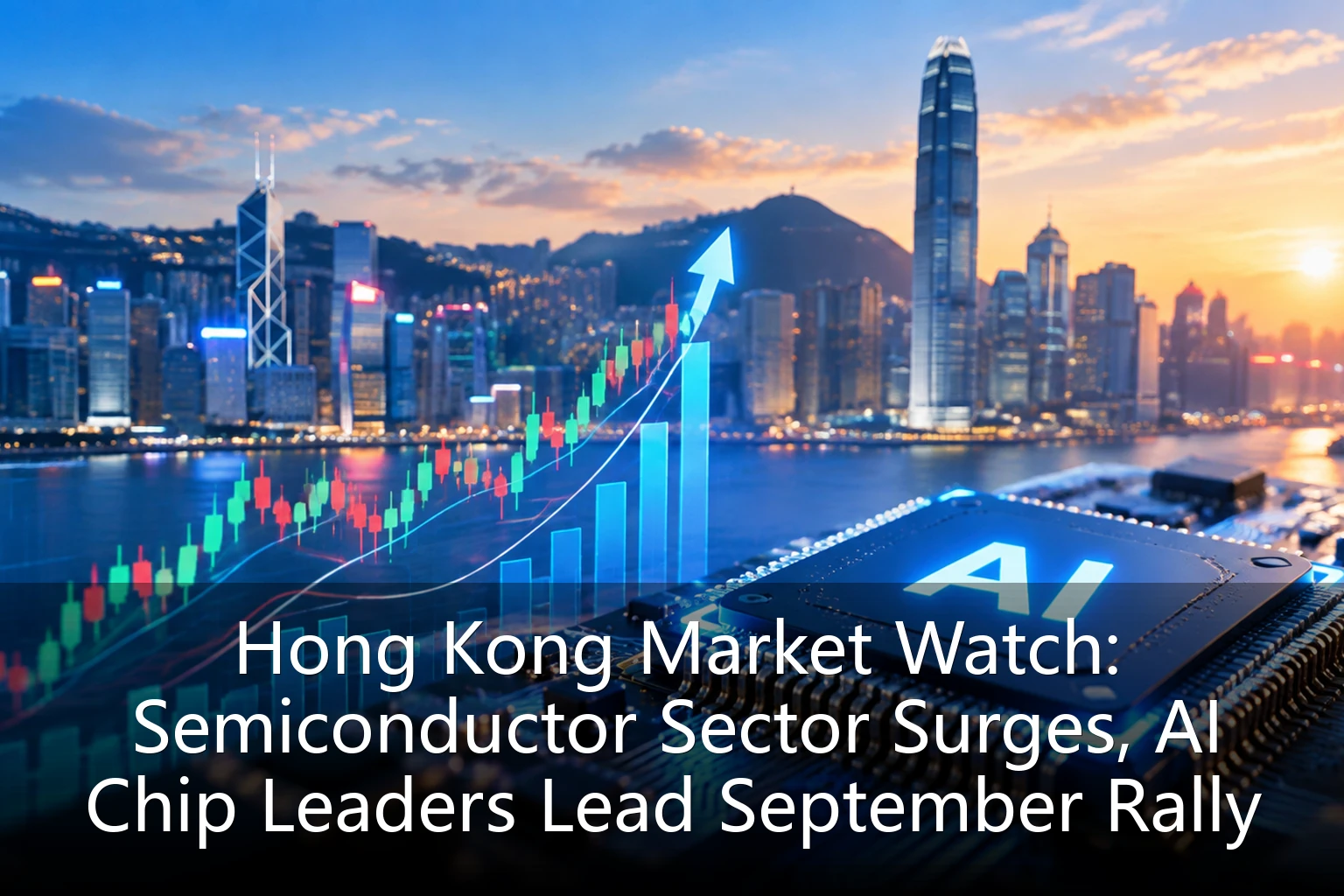
\n\nThe tech sector became the leader in the Hong Kong market in August, particularly artificial intelligence (AI) and semiconductor-related stocks showing outstanding performance. As major global tech companies released their earnings reports, the AI server industry chain experienced a double boost, with related companies exceeding performance expectations and their stock prices climbing accordingly.
\n\nIn the AI field, Hong Kong market segments such as AI servers, chip design, and cloud computing all showed active performance. Market analysts point out that as AI technology continues to be implemented, related industry chain companies will continue to benefit from high industry growth. Especially enterprises with core competitiveness in AI chips and large model training have received continuous capital pursuit.
\n\nThe semiconductor sector also performed impressively. Influenced by factors such as the recovery of global chip demand and accelerated domestic substitution, upstream and downstream enterprises in Hong Kong's semiconductor industry chain generally showed positive performance. Some leading enterprises had full order books and maintained high capacity utilization rates, with strong stock performance. The market expects that with the continuous expansion of emerging application areas such as 5G, IoT, and automotive electronics, the semiconductor industry will usher in a new growth cycle.
\n\nAI Server Industry Chain Experiences Double Boost
\n\nThe AI server industry chain was the brightest star in the tech sector in August. With the continuous increase in AI computing power demand from global tech giants, AI server manufacturers and related component suppliers experienced significant revenue growth. Market data shows that several AI server manufacturers achieved over 50% year-on-year revenue growth in the second quarter, with net profit growth even exceeding 100%.
\n\nThe double boost effect is particularly evident in the AI server industry chain. On one hand, as performance exceeded expectations, market expectations for future corporate profits were raised; on the other hand, against a backdrop of abundant liquidity, valuation levels also increased, jointly driving stock prices upward.
\n\nNotably, Hong Kong's AI server industry chain enterprises benefit not only from the growth of global AI computing power demand but also from the support of domestic AI industry policies. With the deepening of the "digital economy" strategy, domestic AI infrastructure construction is accelerating, providing broad market space for related enterprises.
\n\nSemiconductor Industry Recovery Signals Clear
\n\nThe performance of the semiconductor sector in August was also noteworthy. After previous adjustments, industry recovery signals have become clear. From both supply and demand perspectives, the semiconductor industry is facing multiple positive factors:
\n\n- \n
- Demand side: Continuous expansion of emerging application areas such as 5G, IoT, automotive electronics, and AI is driving chip demand growth \n
- Supply side: Global semiconductor capacity expansion, gradual supply chain recovery, and increased capacity utilization \n
- Policy side: Increased government support for the semiconductor industry in multiple countries, continuous advancement of domestic semiconductor industry self-reliance strategy \n
In the Hong Kong market, leading companies in the semiconductor sector performed particularly prominently. From chip design, manufacturing to packaging and testing, quality companies in all links of the industry chain have received capital favor. Market analysts point out that as industry prosperity recovers, the semiconductor sector still has room for further growth.
\n\nEnergy Sector: Improved Supply-Demand Structure Drives Valuation Recovery
\n\nRunning parallel with the tech sector is the energy sector. Against the backdrop of improved global energy supply-demand structure, Hong Kong's energy sector is experiencing a valuation recovery. Particularly, oil and gas, new energy and other sub-sectors have shown outstanding performance, becoming hot spots for market capital attention.
\n\nIn traditional energy, international crude oil prices remained relatively high, significantly improving the profitability of oil and gas companies. Market data shows that several Hong Kong-listed oil and gas companies achieved over 30% year-on-year net profit growth in the second quarter, with impressive performance. With the gradual recovery of the global economy, energy demand continues to recover, and the profitability of oil and gas companies is expected to further improve.
\n\nIn new energy, against the background of global carbon neutrality, the long-term growth logic of the new energy industry remains unchanged. New energy industry chain enterprises in the Hong Kong market, including photovoltaics, wind power, energy storage and other fields, have all received capital favor. Especially driven by both policy support and technological progress, the new energy industry is ushering in a new round of development opportunities.
\n\nSignificant Profit Improvement for Oil and Gas Companies
\n\nThe oil and gas sector is the most representative sub-sector in the energy sector in August. International crude oil prices fluctuated in the $80-90 per barrel range in the first half of 2026, providing a favorable profit environment for oil and gas companies. Oil and gas companies in the Hong Kong market, especially those with upstream resource advantages, have significantly improved profitability.
\n\nData shows that several Hong Kong-listed oil and gas companies achieved over 30% year-on-year net profit growth in the second quarter, with some even achieving doubled growth. Good performance has become an important support for stock price increases. Market analysts point out that with the gradual recovery of the global economy, energy demand will continue to recover, and the profitability of oil and gas companies is expected to further improve.
\n\nNew Energy Industry Policy Benefits
\n\nAgainst the background of carbon neutrality, the new energy industry is enjoying policy benefits. New energy industry chain enterprises in the Hong Kong market, including photovoltaics, wind power, energy storage and other fields, have all received capital favor. Especially driven by both policy support and technological progress, the new energy industry is ushering in a new round of development opportunities.
\n\nIn photovoltaics, with the acceleration of global energy transformation, photovoltaic power generation costs continue to decline, and market demand is strong. Leading photovoltaic companies in the Hong Kong market have full order books and maintain high capacity utilization rates, with impressive performance. In wind power, offshore wind power has become a new growth point, with related companies benefiting from high industry growth. In energy storage, with the increase in renewable energy proportion, energy storage demand is growing rapidly, and energy storage companies are facing development opportunities.
\n\nSouthbound Funds Accelerate Allocation in High-Growth Sectors
\n\nBehind the strength of technology and energy sectors is the continuous inflow of southbound funds. Data shows that as of August 10, southbound funds have achieved net inflows exceeding 100 billion for three consecutive months, a historical high. Among them, technology and energy sectors are key directions for southbound fund allocation.
\n\nThe accelerated southward allocation of southbound funds is mainly based on the following considerations:
\n\n- \n
- Valuation advantages: After previous adjustments, Hong Kong market valuations are at historical lows, especially quality targets in technology and energy sectors, which have attractive valuations \n
- Growth potential: Technology and energy sectors have good growth potential, aligning with the general direction of China's economic transformation and upgrading \n
- Policy support: Domestic policy places high importance on technological self-reliance and energy security, and related sectors are expected to receive continuous policy support \n
- Liquidity: With the continuous improvement of the Hong Kong Connect mechanism, southbound funds can enter and exit the Hong Kong market more conveniently \n
Market analysts point out that the allocation of southbound funds to the Hong Kong market is still at a low level, and there is still room for further increase in the future. Especially in high-growth sectors such as technology and energy, quality targets still deserve special attention.
\n\nOutlook: Grasping Structural Opportunities, Focusing on High-Growth Sectors
\n\nLooking ahead, the Hong Kong market will continue to present structural opportunities. As the mid-report season gradually unfolds, companies exceeding performance expectations will continue to receive capital pursuit. Especially in technology and energy sectors, quality targets still have room for further growth.
\n\nIn the tech sector, it is recommended to focus on sub-sectors such as AI servers, semiconductors, and cloud computing. With the continuous implementation of AI technology, related industry chain companies will continue to benefit from high industry growth. In the semiconductor field, with the recovery of global chip demand and accelerated domestic substitution, the industry is expected to usher in a new growth cycle.
\n\nIn the energy sector, it is recommended to focus on sub-sectors such as oil and gas, photovoltaics, and wind power. Against the backdrop of improved global energy supply-demand structure, energy sector valuations are expected to further recover. Especially against the background of carbon neutrality, the long-term growth logic of the new energy industry remains unchanged and deserves long-term attention.
\n\nOverall, the Hong Kong market in August exhibits "structural trend" characteristics, with technology and energy sectors becoming the main themes leading the market. Southbound funds continue to flow in, increasing positions in high-growth sectors, further highlighting the valuation advantages of the Hong Kong market. Investors should grasp structural opportunities and focus on quality targets that exceed performance expectations.