October Hong Kong Stock Market Overview: Hot Sectors Lead Structural Opportunities
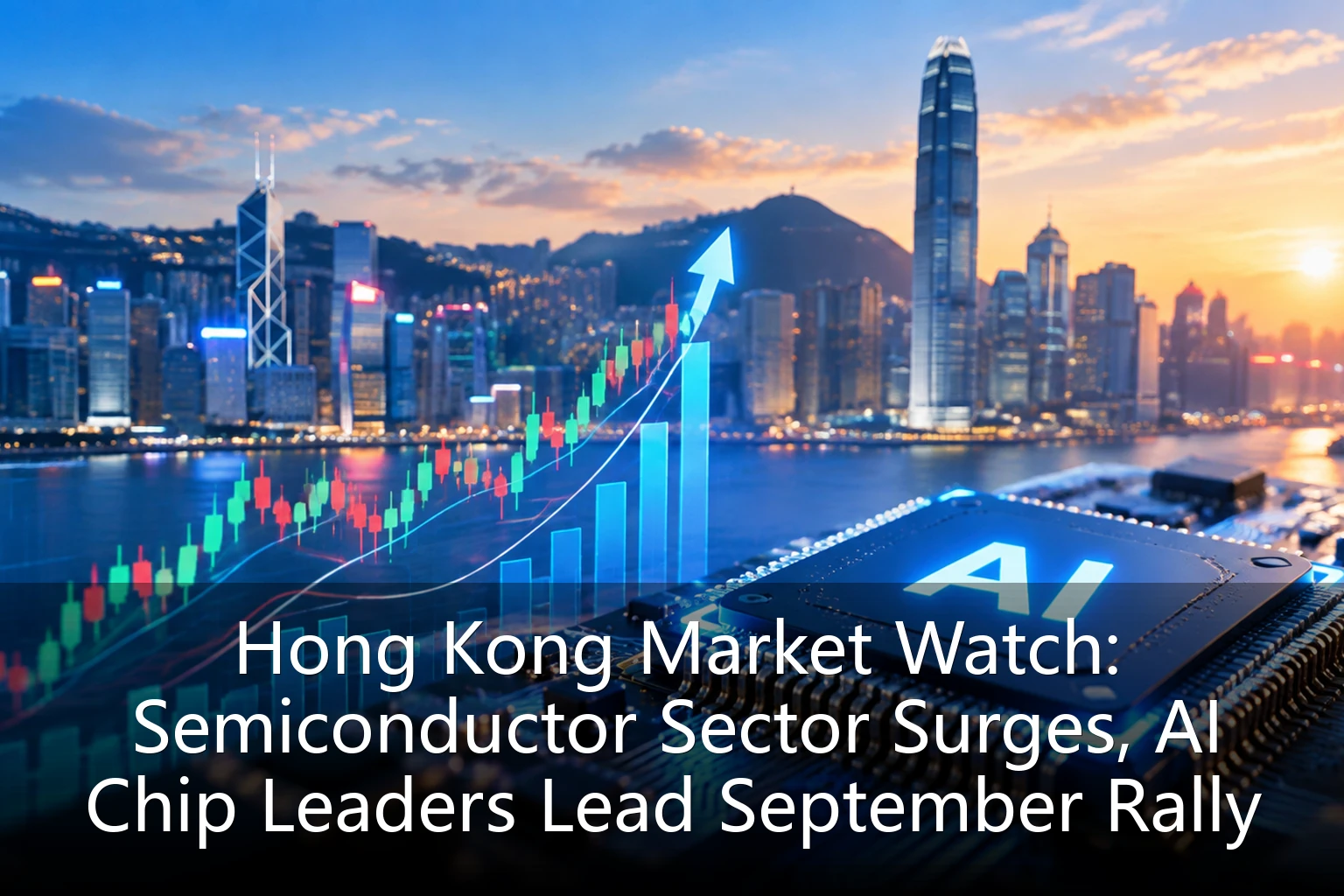
\nThe Hong Kong stock market in early October 2026 showed distinct structural characteristics. Despite increased global market volatility, the Hong Kong market demonstrated strong resilience supported by both valuation advantages and capital inflows. The Hang Seng Index fluctuated around 24,000 points, with market hot spots rotating faster. AI hardware, new energy, consumer electronics and other hot sectors became the focus of capital pursuit. This article will analyze in detail the performance characteristics, driving factors and future investment opportunities of current hot sectors in Hong Kong, providing investors with comprehensive market interpretation.
\n\nOverall Market Performance: Valuation Advantages Attract Capital Inflows
\nSince entering October, the Hong Kong stock market has shown relatively stable performance compared to major global indices. The Hang Seng Index received strong support around the 24,000-point mark, with market valuations at historical lows, attracting continuous inflows of southbound funds. Data shows that since October, the net inflow of southbound funds has exceeded 30 billion Hong Kong dollars, with technology and new energy sectors becoming key areas for capital allocation.
\nFrom a market structure perspective, the Hong Kong market shows a clear "20-80 divergence" feature, where about 20% of hot sectors contribute to over 80% of market gains, while most other sectors perform relatively flat. This structural differentiation makes grasping the rotation rhythm of hot sectors key to investing in Hong Kong stocks.
\n\nAI Hardware Sector: Core Driving Force of Technological Revolution
\nSector Performance and Driving Factors
\nThe AI hardware sector has become the brightest star in the October Hong Kong stock market, with related indices rising more than 15% in the month, significantly outperforming the broader market. The strong performance of this sector is mainly due to the rapid development of the global artificial intelligence industry and the explosive growth of related hardware demand.
\nIn terms of driving factors, first, global tech giants have recently launched new-generation AI chips, boosting the prosperity of the entire industrial chain. Second, governments worldwide have continuously increased support for the AI industry, with related policies and funds continuously flowing in. Third, the continuous expansion of AI application scenarios, from data centers to edge computing, from autonomous driving to smart homes, has shown diversified growth in demand for AI hardware.
\nKey Stock Analysis
\nIn the AI hardware sector, several leading stocks have performed particularly well. Among them, a well-known AI chip design company's stock price rose by more than 30% in the month, as its newly released AI chip offers 3 times better performance and 40% lower energy consumption than the previous generation, receiving enthusiastic market response. Another company focused on AI servers, leveraging its advantages in high-density computing, saw order volume grow by over 100% year-on-year, with its stock price reaching a new high for the year.
\nNotably, the strong performance of the AI hardware sector is not a short-term phenomenon but a structural opportunity based on long-term industry development trends. With continuous advancement in AI technology and expansion of application scenarios, the AI hardware industrial chain is expected to experience sustained growth.
\nInvestment Logic and Risk Warnings
\nWhen investing in the AI hardware sector, focus should be on enterprises with core technologies and market competitiveness, while also paying attention to the synergistic effects along the industrial chain. In terms of risks, be alert to technology iteration risks, increased industry competition, and uncertainties brought by changes in the international trade environment.
\n\nNew Energy Sector: Dual-wheel Drive by Policy and Demand
\nSector Performance and Market Opportunities
\nThe new energy sector is another major hotspot in the October Hong Kong stock market, with related indices rising nearly 12% in the month. The strong performance of this sector is mainly driven by the accelerated progress of global carbon neutrality and continuous breakthroughs in new energy technologies.
\nIn terms of sub-sectors, the new energy vehicle industry chain has performed particularly impressively, with battery technology, charging infrastructure, smart driving and other sub-sectors showing notable performance. Among them, solid-state battery technology has made significant breakthroughs, with related concept stocks generally rising more than 20% in the month. Additionally, photovoltaic and wind power sectors have received policy support, with order volumes continuing to grow.
\nPolicy Environment and Industrial Chain Development
\nAt the policy level, governments have recently increased support for the new energy industry, including subsidy policies, tax incentives and infrastructure construction. The Hong Kong government has also launched the "Green Finance Plan" to provide financing support for new energy enterprises. These policy measures provide strong guarantees for the development of the new energy industry.
\nIn terms of the industrial chain, the synergistic effects between upstream and downstream of the new energy industry are increasingly evident. Upstream raw material supply is stable, midstream manufacturing technology continues to break through, and downstream application scenarios continue to expand, forming a complete industrial ecosystem. Especially in the new energy vehicle sector, significant progress has been made in the three core areas: battery technology, motor technology, and control technology.
\nInvestment Strategy and Risk Considerations
\nWhen investing in the new energy sector, focus should be on leading enterprises with technological advantages and scale effects, while also paying attention to collaborative development opportunities along the industrial chain. In terms of risks, be alert to raw material price fluctuations, changes in technology routes, and uncertainties brought by policy adjustments.
\n\nConsumer Electronics Sector: Innovation-driven Valuation Recovery
\nThe consumer electronics sector also performed well in October, with a monthly increase of 8%. The recovery of this sector is mainly due to the arrival of product innovation cycles and the gradual recovery of global consumer demand.
\nIn terms of sub-sectors, emerging consumer electronics categories such as smart wearables, smart homes, and AR/VR are growing rapidly. Among them, a well-known consumer electronics brand's new-generation smart watch, with significant upgrades in health monitoring functions, saw sales grow by over 50% year-on-year, significantly improving the performance of related industrial chain companies.
\nInvestment opportunities in the consumer electronics sector are mainly reflected in two aspects: performance improvement brought by product innovation, and stock price appreciation brought by valuation recovery. As the consumer electronics industry enters a new innovation cycle, enterprises with core technologies and product design capabilities are expected to achieve excess returns.
\n\nSector Rotation Analysis: Capital Flows and Market Rhythm
\nCapital Flow Characteristics
\nThe capital flows in the October Hong Kong stock market show a clear "seesaw" effect. While AI hardware and new energy sectors continue to attract capital, traditional sectors such as finance and real estate face capital outflows. This capital rotation between sectors reflects changes in market risk appetite and the transformation of structural opportunities.
\nIn terms of capital flow data, southbound funds are mainly concentrated in technology and new energy sectors, while northbound funds focus more on high-dividend value blue-chip stocks. This differentiated capital allocation makes the Hong Kong market show a "domestic capital in tech, foreign capital in value" differentiation feature.
\nSector Rotation Patterns
\nThe sector rotation in the October Hong Kong stock market shows a clear "policy-driven - performance verification - valuation recovery" three-step feature. First, policy benefits lead to sector gains; second, corporate performance verifies investment logic; finally, valuation recovery is completed, and capital begins to seek new hot spots.
\nTo grasp the sector rotation rhythm, close attention should be paid to three dimensions: policy changes, performance expectations, and market sentiment. Currently, AI hardware and new energy sectors are in the "performance verification" stage, the consumer electronics sector is in the "valuation recovery" stage, while traditional sectors such as finance and real estate are in a "valuation lowland" stage, expected to encounter rotation opportunities.
\n\nInvestment Strategy Recommendations: Grasping Structural Opportunities
\nAllocation Strategy
\nBased on the current Hong Kong market structure, investors are advised to adopt a "core + satellite" allocation strategy. Core allocation should focus on leading enterprises in AI hardware and new energy sectors, while satellite allocation should focus on value targets in consumer electronics and finance sectors. This allocation strategy can both grasp structural opportunities and control overall risks.
\nIn specific operations, it is recommended to adopt a "buying on dips, batch position building" strategy, avoiding chasing high prices. At the same time, closely monitor policy changes and performance expectations, and adjust portfolio structure in a timely manner.
\nRisk Management
\nThe Hong Kong stock market is highly volatile, making risk management particularly important. Investors are advised to set reasonable stop-loss levels, control position proportions for individual stocks, and avoid over-concentrated investments. Meanwhile, market risks can be hedged through derivative instruments, such as using options, futures and other financial derivatives for risk hedging.
\n\nConclusion and Outlook: Structural Opportunities Continue to Exist
\nThe October Hong Kong stock market shows distinct structural characteristics, with hot sectors such as AI hardware, new energy and consumer electronics leading market performance. This structural differentiation reflects the market's preference for high-growth enterprises and also demonstrates capital's grasp of industry trends.
\nLooking ahead, the Hong Kong market will continue to feature structural opportunities as the main characteristic. High-growth sectors such as AI hardware and new energy are expected to continue to receive capital favor, while traditional sectors may find opportunities in valuation recovery. Investors should closely monitor policy changes, performance expectations and market sentiment, flexibly adjust investment strategies, and grasp structural opportunities.
\nOverall, against the background of global valuation lowlands, the Hong Kong market still has significant investment value. By grasping the rotation rhythm of hot sectors and selecting quality individual stocks, investors are expected to achieve excess returns in the Hong Kong market.