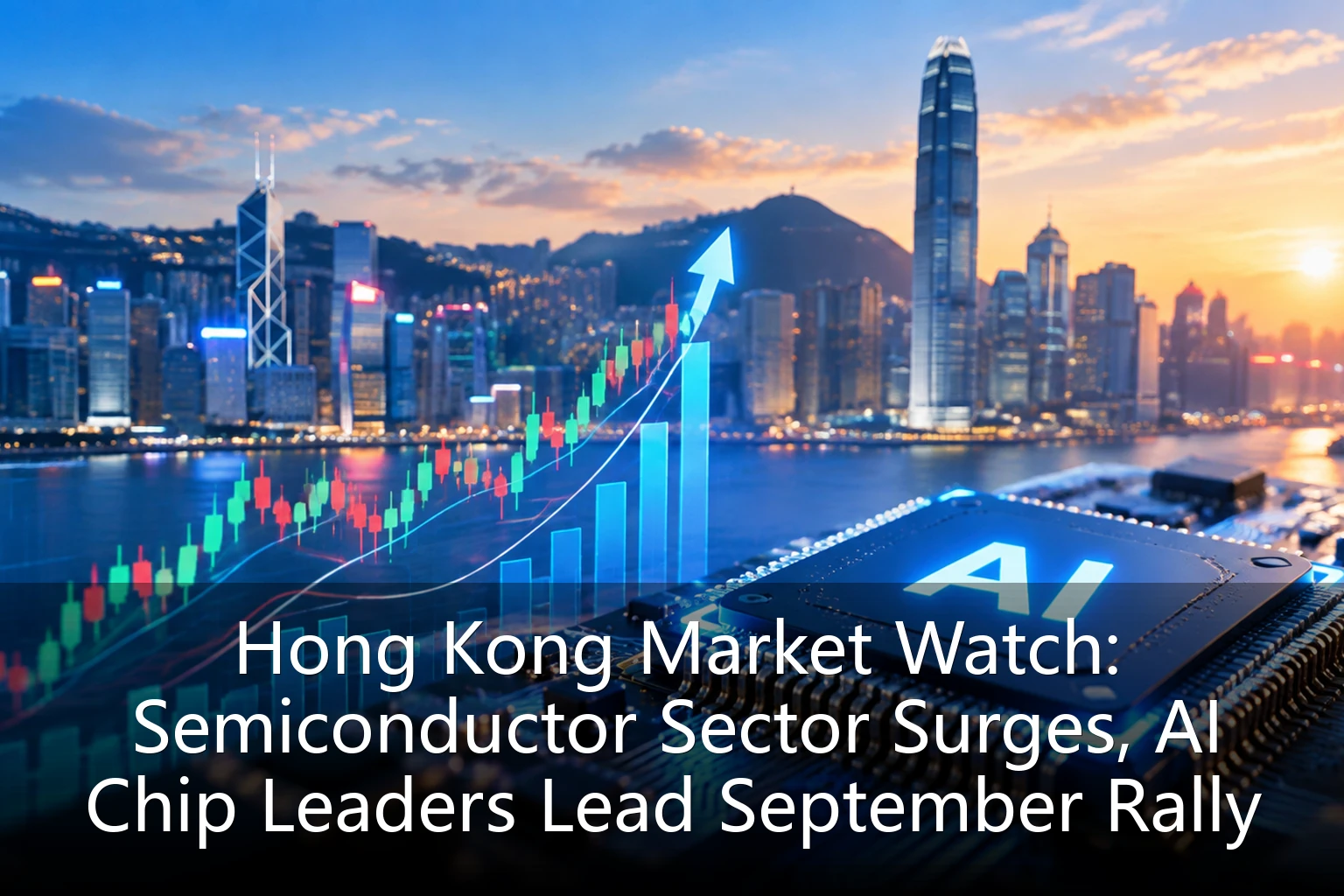
Hong Kong Stock Market at End of September: Technology Sector Leads Valuation Recovery Rally
At the end of September 2026, the Hong Kong stock market showed clear structural differentiation, with the technology sector, particularly AI hardware and consumer electronics acting as dual drivers, becoming the core force leading market strength. As the earnings season for global tech giants began and the technological innovation strategy in China's "14th Five-Year Plan" continued to advance, the Hong Kong technology sector experienced a valuation recovery rally. The Hang Seng Index fluctuated and consolidated around the 24,000-point mark, with market sentiment gradually warming.
AI Hardware Sector: Explosive Computing Demand Drives Comprehensive Industry Growth
Entering late September, the AI hardware sector became the brightest star in the Hong Kong stock market. As global AI applications accelerated implementation, demand for high-performance computing chips and AI servers showed explosive growth. Data showed that the global AI server market grew by more than 40% year-on-year in the third quarter of 2026, leading to significant performance improvements for related industry companies.
In the Hong Kong stock market, specialized areas such as AI chip design, server manufacturing, and data center operations all showed outstanding performance. Among them, leading AI chip stocks, leveraging their technological advantages and market position, saw their share prices rise by more than 30% cumulatively in September, with market values reaching all-time highs. Analysts pointed out that this round of growth in the AI hardware sector is not short-term speculation but is based on substantial improvements in industry fundamentals, offering sustainable investment value.
From an industry chain perspective, the rise of the AI hardware sector showed clear upstream and downstream linkage effects. Upstream chip design companies benefited from the growth in AI computing demand, midstream server manufacturers had full order books, and downstream data center operators saw significant performance improvements due to expansion in computing leasing businesses. This collaborative development model across the entire industry chain has made the AI hardware sector a hot spot for capital pursuit.
Consumer Electronics Sector: Innovation Product Cycle Begins, Valuation Sees Recovery
In response to the AI hardware sector, the consumer electronics sector also saw significant growth at the end of September. With the concentrated release of new-generation smartphones, wearable devices, and smart home products, the consumer electronics industry entered a new innovation cycle, leading to upward revisions in performance expectations for related listed companies.
In the Hong Kong stock market, leading companies in the consumer electronics sector, with their strong brand influence and technological innovation capabilities, showed particularly outstanding stock price performance. Data showed that the consumer electronics sector index rose by more than 15% cumulatively in September, outperforming the overall Hang Seng Index. Market analysts believe the growth in the consumer electronics sector is mainly driven by three factors: first, performance growth expectations from the new product cycle; second, the trend of global consumer electronics industry chains shifting to China; and third, the relative stability of the RMB exchange rate benefits export-oriented enterprises.
Notably, the growth in the consumer electronics sector was not widespread but showed clear structural characteristics. Among them, specialized areas such as AIoT (Internet of Things), smart wearables, and high-end smartphones performed particularly well, while companies related to traditional consumer electronics products were relatively flat. This differentiation reflects the market's preference for companies with higher innovation capabilities and technical barriers.
Capital Flow: Southbound Funds Continue to Increase Positions in Technology Sector
From a capital perspective, southbound funds continued to increase their positions in Hong Kong's technology sector at the end of September. Data showed that in September, southbound funds had a cumulative net inflow of over 30 billion Hong Kong dollars through the Hong Kong Stock Connect, with over 60% flowing into the technology sector. This indicates that mainland investors' recognition of the long-term value of Hong Kong's technology sector continues to increase.
In terms of capital allocation structure, southbound funds showed clear preferences within the technology sector: on one hand, growth-oriented sectors such as AI hardware and consumer electronics received capital pursuit; on the other hand, some high-dividend technology stocks with reasonable valuations and stable cash flows were also favored. This dual "growth + value" allocation strategy reflects the cautious attitude of southbound funds in the current market environment.
Sector Rotation Accelerates: Technology and Consumption Dual Mainlines Lead New Market Pattern
The Hong Kong stock market at the end of September showed clear sector rotation characteristics, with faster capital flow between different sectors. Historical data shows that the Hong Kong stock market has always had obvious sector rotation phenomena, which was particularly evident in September. Capital flowed out of traditional sectors such as finance and real estate and continuously flowed into technology and consumption sectors, forming a new market pattern.
Behind the sector rotation are changes in market expectations for economic fundamentals and policies. On one