Hong Kong Stocks: Reassessing Value, Policy Support, and Structural Opportunity
Keywords: Hong Kong stocks, Hang Seng Index, valuation recovery, policy support, southbound capital, technology shares, dividend strategy, market volatility
Introduction
Hong Kong stocks occupy a unique position in the global financial system. As a market that links Chinese economic fundamentals with international capital flows, the Hong Kong equity market is often more than a local barometer—it is a concentrated expression of policy expectations, growth confidence, liquidity conditions, and foreign investor sentiment. When global risk appetite improves, Hong Kong equities often benefit disproportionately. When uncertainty rises, they can also experience sharper volatility than many other major markets.
In recent years, Hong Kong stocks have moved through a period of compressed valuations, shifting sector leadership, and periodic sentiment reversals. Yet beneath the headline fluctuations, the market continues to offer one of the most distinctive combinations of low valuation, earnings sensitivity, and policy optionality in Asia. For long-term investors, the central question is no longer whether Hong Kong stocks are “cheap,” but whether the market can translate valuation discount into sustained earnings recovery and capital inflows.
This article examines the current investment logic of Hong Kong stocks from several angles: the macro backdrop, valuation dynamics, sector opportunities, external risks, and practical allocation strategies. The goal is not to identify a perfect market bottom, but to understand how to evaluate opportunities in a market that remains both challenged and potentially underappreciated.
1. The Macro Backdrop: Hong Kong Stocks as a Risk-Sensitive Asset Class
The Hong Kong stock market is highly sensitive to changes in global liquidity, interest-rate expectations, and investor risk appetite. Unlike purely domestic markets, Hong Kong equities sit at the intersection of Chinese economic trends and global capital allocation. That dual exposure creates both opportunity and fragility.
On the opportunity side, any improvement in policy clarity, Chinese economic momentum, or capital market support can be quickly reflected in Hong Kong valuations. On the fragility side, external shocks—such as rising U.S. rates, tighter dollar liquidity, geopolitical tensions, or declining global growth expectations—can trigger fast and sometimes excessive repricing.
This sensitivity helps explain why market participants often monitor other asset classes, especially defensive assets such as gold, for signals about broader risk sentiment. When investors seek safety, capital frequently rotates toward hard assets and away from higher-beta equity markets. The following images, although focused on gold market analysis, are relevant to the broader macro conversation because they reflect the same caution and hedging behavior that often influences Hong Kong stocks.
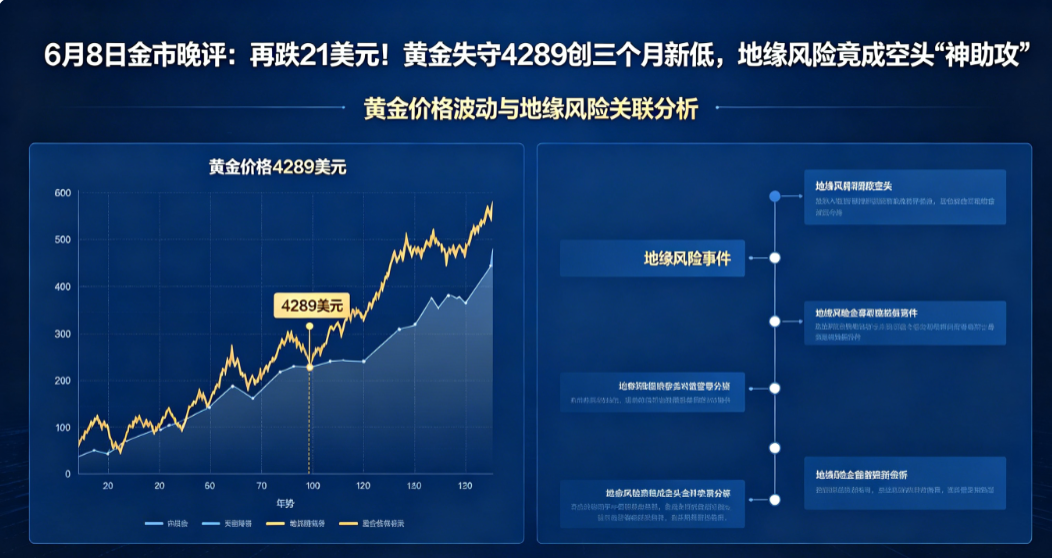
In a risk-off environment, gold’s strength often corresponds with a preference for capital preservation. For Hong Kong equities, this can mean lower foreign inflows and a higher discount on growth-oriented sectors. However, the reverse is equally important: when risk sentiment stabilizes and investors seek higher return potential, Hong Kong stocks can recover quickly because they usually start from relatively compressed valuations.
2. Why Valuation Still Matters in Hong Kong
One of the most persistent features of Hong Kong stocks is valuation discount. Compared with U.S. equities and even some other Asian markets, Hong Kong-listed companies frequently trade at lower price-to-earnings and price-to-book ratios. This discount reflects multiple factors: structural concerns about growth, geopolitical overhang, corporate governance perceptions, earnings uncertainty, and capital flow risk.
Yet valuation discount is not inherently negative. In markets where expectations are already modest, even moderate improvements in fundamentals can produce outsized price performance. That is especially true in Hong Kong, where many leading companies have strong franchises, global revenue exposure, and deep market liquidity. The key is distinguishing between “cheap for a reason” and “cheap with a catalyst.”
For example, large-cap internet platforms, financial institutions, and high-dividend state-linked companies often trade at valuation levels that already reflect substantial caution. If earnings stability improves, regulatory visibility increases, or capital return policies become more shareholder-friendly, these names can re-rate meaningfully. In other words, the market does not need perfection; it needs incremental confidence.
Valuation also matters because it shapes downside protection. In volatile markets, lower starting valuations can reduce the risk of severe multiple compression. This makes Hong Kong stocks attractive for investors who are willing to endure cyclical uncertainty in exchange for longer-term mean reversion potential.
3. Sector Opportunities: Where Hong Kong Stocks May Offer the Best Risk-Reward
Hong Kong stocks are not a monolithic asset class. Investment opportunities differ substantially across sectors. A selective approach is therefore more important than broad index exposure.
3.1 Technology and Internet Platforms
Hong Kong remains home to many of the region’s leading internet and platform companies. These businesses continue to benefit from large user bases, robust ecosystem effects, and expanding applications in artificial intelligence, cloud services, digital advertising, and e-commerce logistics.
The investment case for this segment rests on three factors: earnings resilience, operating leverage, and strategic optionality. As the macro environment stabilizes, investors tend to reward platform companies with clearer monetization pathways and better capital discipline. Firms that combine strong cash flow generation with disciplined investment in AI and enterprise software may see improved market sentiment.
3.2 Financials and the Role of Dividends
Financial stocks, especially banks and insurers, often serve as a stabilizing force in Hong Kong portfolios. Their appeal lies in yield, balance-sheet strength, and sensitivity to policy direction. In an environment where global investors remain selective, dividend-supported names can attract capital seeking both income and relative safety.
For long-term investors, financials in Hong Kong can play two roles. First, they provide a cash-return component that may outperform during sideways markets. Second, they offer exposure to broader economic recovery if credit demand, wealth management activity, and capital market transactions improve.
3.3 State-Linked and High-Distribution Companies
High-dividend companies, particularly those with stable cash generation and clear shareholder-return policies, have become an increasingly important segment of the Hong Kong market. In a world of uneven growth and elevated uncertainty, investors often value predictability over aggressive expansion.
This segment may not deliver explosive upside, but it can offer a more defensible return profile. For institutions and conservative investors, high-distribution equities can serve as a core holding, especially when combined with a disciplined entry strategy.
3.4 Selective Consumption, Healthcare, and Biotech
Consumer and healthcare stocks in Hong Kong present a more nuanced picture. On one hand, they can benefit from structural demand, aging demographics, and rising spending on premium products and medical services. On the other hand, they are sensitive to income confidence and policy shifts.
In healthcare and biotech specifically, valuation can be highly sensitive to clinical milestones, reimbursement policy, and cross-border collaboration. Investors in this space must be prepared for higher volatility but can also benefit from long-duration growth potential. Selectivity is essential, as the gap between quality leaders and weaker players is often wide.
4. External Risks That Still Limit Re-Rating
Despite its opportunities, Hong Kong stocks face several meaningful risks that should not be underestimated.
4.1 Global Interest Rates and Dollar Liquidity
Hong Kong’s currency peg ties local financial conditions closely to the U.S. dollar. As a result, changes in U.S. monetary policy can affect borrowing costs, market liquidity, and portfolio flows. Even when the domestic business environment improves, a restrictive global rate environment can limit equity revaluation.
4.2 Geopolitical and Regulatory Uncertainty
Hong Kong stocks remain exposed to cross-border policy dynamics and geopolitical tensions. These factors can influence investor positioning more than underlying fundamentals in the short term. For international investors, policy visibility matters almost as much as earnings visibility.
4.3 Earnings Credibility
A low valuation market can still stay depressed if earnings expectations are repeatedly revised downward. For that reason, the market is likely to reward companies that can demonstrate consistency in revenue growth, margin discipline, and capital allocation. Investors should be wary of businesses that rely on narrative without clear financial execution.
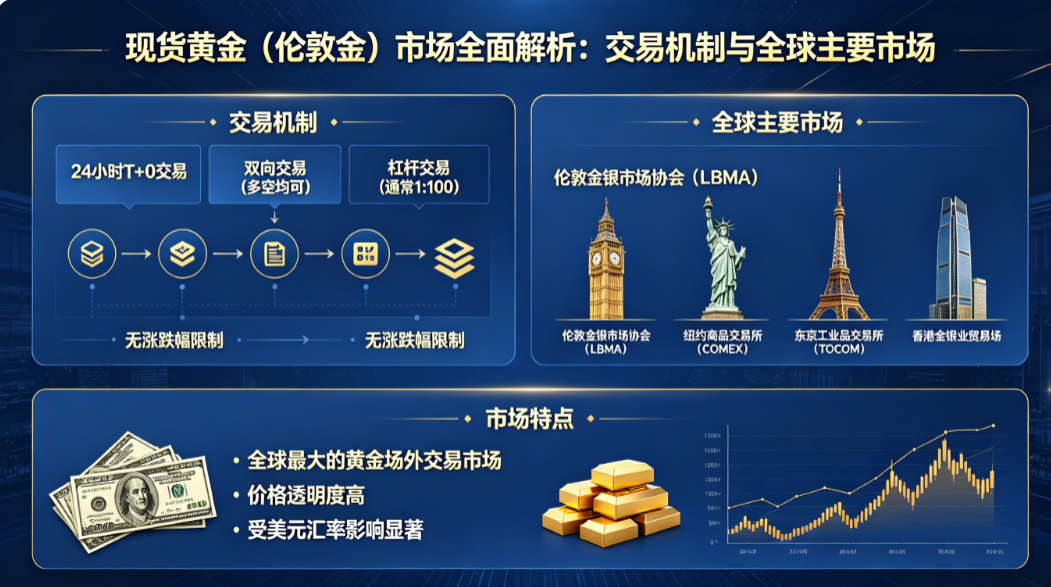
The second image reinforces an important point: in periods of uncertainty, investors often seek assets perceived as resilient or inflation-resistant. That does not mean Hong Kong stocks should be avoided; rather, it means they must be approached with a more selective and risk-aware framework. In a market where defensive assets are in demand, equity investors need a stronger reason to own cyclical risk.
5. How to Approach Hong Kong Stocks: A Practical Allocation Framework
For investors considering Hong Kong stocks, the most effective strategy is usually not broad speculation, but disciplined allocation.
5.1 Focus on Quality and Cash Flow
Quality should be the first filter. Companies with strong free cash flow, manageable leverage, and sustainable competitive advantages are better positioned to withstand volatility. In a market where sentiment can change abruptly, balance-sheet resilience matters as much as growth potential.
5.2 Balance Growth with Yield
Hong Kong stocks can serve different purposes within a portfolio. Growth-oriented names offer upside if the market re-rates, while dividend-paying names provide income and downside cushioning. A balanced portfolio can combine both, reducing dependence on a single macro outcome.
5.3 Use Staged Entry Rather Than All-at-Once Timing
Because Hong Kong equities can move sharply on news flow, staged entry is often preferable to large single-point allocation. Investors can use market pullbacks to accumulate quality names gradually, especially when macro uncertainty is elevated but long-term fundamentals remain intact.
5.4 Separate Index Views from Stock Selection
A cautious view on the broader index does not necessarily mean rejecting every individual opportunity. In fact, periods of weak index performance often create attractive entry points in leading companies. The distinction between top-down market sentiment and bottom-up company fundamentals is especially important in Hong Kong.
Conclusion
Hong Kong stocks remain one of the most interesting equity markets in Asia because they combine deep valuation discounts with meaningful policy and cyclical upside. The market is not without challenges: global rates remain a constraint, geopolitical uncertainty has not disappeared, and earnings recovery is still uneven across sectors. However, these very uncertainties are what keep valuations attractive and create the possibility of outsized returns for disciplined investors.
The investment case for Hong Kong stocks is therefore not based on optimism alone. It rests on a more measured thesis: the market already prices in significant caution, and any combination of policy improvement, earnings stabilization, capital inflow, or sentiment normalization could drive a meaningful re-rating. The best opportunities are likely to come not from chasing headline momentum, but from identifying companies with durable cash flow, clear shareholder returns, and strategic relevance in a changing economy.
For investors who can tolerate volatility and apply a selective framework, Hong Kong stocks still deserve close attention. In an environment where defensive assets continue to attract attention and global capital remains cautious, the market’s discount may ultimately become its most important advantage.