Hong Kong Stocks: Repricing Opportunity Amid Policy Support, Global Liquidity Shifts, and Sector Rotation
Keywords: Hong Kong stocks, Hang Seng Index, valuation gap, southbound inflows, policy support, market rotation, technology sector, high-dividend assets, global liquidity, investment strategy
Introduction
Hong Kong stocks have once again returned to the center of market attention. After several rounds of sharp volatility in recent years, the market is now being shaped by a more complex combination of forces: China’s policy orientation, the pace of global interest-rate changes, the persistence of capital inflows through the southbound channel, and the ongoing revaluation of risk assets worldwide. For investors, the Hong Kong market is no longer simply a proxy for Chinese sentiment; it has evolved into a distinct cross-border pricing arena where macro expectations, earnings recovery, and capital allocation interact continuously.
What makes the current stage particularly important is that valuations in Hong Kong remain relatively attractive compared with other major equity markets, yet the discount alone is not enough to drive a sustained re-rating. Market participants are increasingly focused on whether earnings can stabilize, whether liquidity can improve, and whether policy support can translate into real corporate performance. In other words, the question is not whether Hong Kong stocks are cheap, but whether they are cheap for the right reasons—and whether those reasons are beginning to change.
A Global Macro Backdrop That Matters
The direction of Hong Kong equities is closely tied to global liquidity. When U.S. yields remain elevated, risk appetite tends to weaken, and growth-sensitive assets across Asia often face pressure. Conversely, when the market begins to anticipate a turn in the global rate cycle, Hong Kong stocks frequently benefit from a valuation rebound, especially in sectors with long-duration earnings such as technology and consumer internet.
At the same time, gold’s renewed strength reflects a broader shift in global asset allocation. Rising gold prices often indicate that investors are seeking hedges against policy uncertainty, geopolitical tension, and currency volatility. That environment does not automatically hurt Hong Kong stocks, but it does reinforce the importance of defensiveness and balance in portfolio construction.
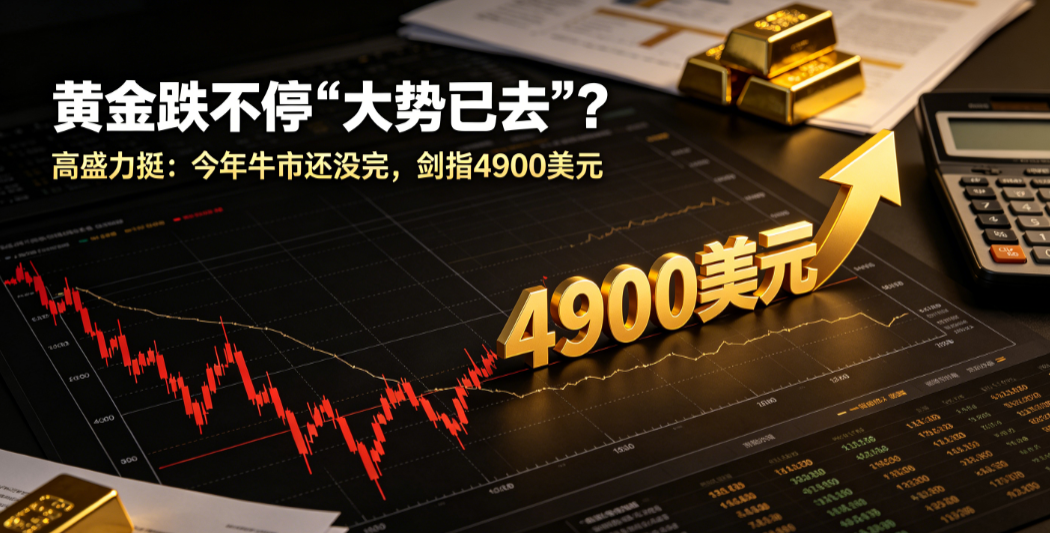
For Hong Kong equities, a gold-supportive environment can be interpreted in two ways. First, it highlights a market still concerned about systemic uncertainty, which can cap risk appetite. Second, it underscores the value of assets with strong cash flow, high dividends, and visible earnings resilience. In periods when investors are unwilling to pay up for distant growth, Hong Kong often becomes a battlefield between value and uncertainty.
Why Hong Kong Stocks Remain Structurally Important
Hong Kong occupies a unique position in the global capital market. It is both a gateway for international investors to access Chinese assets and a channel through which mainland capital seeks diversified exposure. This dual identity gives the market several structural advantages.
First, valuation. Compared with many developed markets, Hong Kong still trades at a discount on forward earnings and book value across a wide range of sectors. This discount reflects not only cyclical concerns, but also expectations regarding the Chinese growth outlook and corporate governance risks. However, when sentiment stabilizes, the market has the potential to rerate quickly because the starting valuation is low.
Second, dividend appeal. A number of Hong Kong-listed Chinese banks, utilities, telecom operators, and state-owned enterprises offer comparatively attractive dividend yields. In a higher-for-longer rate environment, yield becomes a crucial factor. Investors who are not willing to chase high-growth stories can still find income-oriented opportunities in the market.
Third, policy transmission. Many Hong Kong-listed companies are directly sensitive to shifts in mainland policy, particularly in real estate, financials, infrastructure, and technology regulation. When policy support becomes more consistent and credible, the market tends to respond faster than domestic onshore markets because Hong Kong prices in expectations earlier.
Fourth, internationalization. Hong Kong remains one of the few markets where global investors can access a broad spectrum of Chinese assets with relatively high liquidity and flexible trading mechanisms. This matters in an era when capital is searching for both diversification and thematic exposure.
Sector Rotation Is Replacing Broad-Based Betting
One of the clearest features of the current Hong Kong market is the dominance of sector rotation. Broad index performance is often less important than the relative strength between themes. Investors are increasingly selective, favoring companies with stronger balance sheets, clearer earnings trajectories, or direct policy support.
1. Technology and Internet Platforms
Hong Kong-listed technology and internet names remain central to any bull case. These companies offer scale, cash generation, and exposure to long-term digitalization trends. However, the market’s willingness to reward them depends on three conditions: earnings stability, regulatory clarity, and the level of global risk appetite.
If overseas technology stocks continue to rally on the back of AI and semiconductor enthusiasm, Hong Kong tech may benefit from valuation sympathy. But the market’s own narrative must be built on more than external comparison. Investors want evidence that domestic consumption is improving, monetization is holding up, and capital expenditure is disciplined.

The image above captures an important external signal. When U.S. tech and semiconductor names show resilience, Hong Kong technology shares often experience a spillover effect, especially in areas linked to cloud services, online platforms, and chip-related supply chains. Yet the correlation is not perfect. Hong Kong tech must also contend with domestic demand conditions and policy sensitivity, making stock selection more important than sector exposure alone.
2. Financials and Banks
Financials are among the most important components of the Hong Kong market, especially large banks and insurers. These names often serve as a stabilizing force because they combine valuation support with dividend yield. However, their outlook is closely linked to credit growth, net interest margins, and asset quality.
If China’s economy shows signs of stabilization and policy easing becomes more targeted, financials could continue to attract income-oriented investors. But if credit demand remains soft or the property sector remains under stress, banks may face pressure on profitability and sentiment. In this context, financials are less a growth trade and more a confidence barometer for the broader economy.
3. Property and Related Cyclical Sectors
Property remains the most sensitive and most debated segment of Hong Kong-linked markets. The sector is heavily influenced by mainland housing demand, financing conditions, and policy intervention. While periodic support measures can trigger sharp rebounds, durable recovery depends on whether end-user confidence returns and inventory pressure eases.
For investors, the property segment offers high beta but also high uncertainty. It is appropriate for those who can tolerate volatility and who understand the policy-driven nature of the trade. Without a clear improvement in fundamentals, rallies may remain tactical rather than structural.
4. Consumer, Healthcare, and Defensive Growth
Consumer discretionary and healthcare names offer a different kind of opportunity. They are usually less dependent on macro enthusiasm and more linked to long-term structural trends such as aging, premiumization, and service consumption. In a market where risk appetite remains uneven, these sectors can provide balance.
The challenge is that sentiment alone is not enough. Consumers must actually spend, and company margins must remain intact. Therefore, the best names in these sectors are often those with strong brand power, clear product differentiation, or high recurring revenue.
The Role of Southbound Flows and Mainland Capital
Southbound funds have become one of the most important supporting forces for Hong Kong stocks. Mainland investors often favor large-cap Hong Kong names for their dividend yield, global exposure, and relative valuation. Their participation helps reduce the market’s dependence on foreign capital cycles alone.
However, southbound inflows are not unconditional. They tend to favor sectors with visible earnings, policy alignment, and liquidity. In practice, this means that large banks, telecom operators, consumer leaders, and select technology names often receive the most attention. The flow is therefore both a source of support and a mechanism of selection.
This matters because it changes how the market trades. Rather than relying on broad index speculation, investors increasingly track where domestic capital is actually going. If southbound flows remain steady while earnings expectations improve, Hong Kong stocks could enjoy a more durable re-rating. If flows slow, the market may revert to a narrow, theme-driven pattern.
What Could Drive a Re-Rating?
A meaningful re-rating of Hong Kong stocks would likely require a combination of factors rather than a single catalyst.
First, earnings must begin to bottom out. Markets can tolerate weak growth for a period, but they generally need evidence that profit contraction has ended or is narrowing. This is especially true for cyclicals and internet platforms.
Second, policy support must be credible and sustained. Investors are more willing to pay higher multiples when they believe that authorities are not merely reacting to weakness but are actively constructing a more stable medium-term environment.
Third, global interest rates need to stop rising or begin to decline. Hong Kong is highly sensitive to global valuation compression, and lower yields would improve the relative attractiveness of equities, especially dividend-paying and growth-sensitive names.
Fourth, sentiment toward Chinese assets more broadly must improve. Hong Kong does not trade in isolation; it is often the first market to absorb optimism or pessimism about China’s broader economic trajectory.
Key Risks That Cannot Be Ignored
Despite the attractive valuation, investors should not underestimate the risks.
The first risk is earnings disappointment. Low valuations are not a guarantee of returns if profits continue to weaken. A cheap market can stay cheap for a long time if fundamentals do not recover.
The second risk is policy inconsistency. Markets respond positively to support, but they dislike ambiguity. If investors believe that stimulus measures are short-lived or unevenly implemented, confidence can fade quickly.
The third risk is external pressure, including U.S.-China relations, currency volatility, and global risk-off episodes. Hong Kong’s openness makes it more exposed than many domestic markets to sudden capital repricing.
The fourth risk is sector concentration. If gains are concentrated only in a few heavyweight names, index performance may look better than the broader market reality. This can create a misleading sense of recovery.
Investment Strategy: Balance, Discipline, and Selectivity
For investors considering Hong Kong stocks, the best approach is likely to be a barbell strategy.
On one side, hold high-quality dividend assets with strong cash flow, stable business models, and reasonable leverage. These names can provide defensive income and help manage volatility.
On the other side, maintain exposure to select growth sectors such as leading internet platforms, high-quality technology names, and companies that could benefit from policy tailwinds or improved consumer confidence. These positions offer upside if sentiment turns and earnings recover.
What should be avoided is blind index chasing. In the current environment, not every rally is sustainable, and not every cheap stock is a value opportunity. Investors need to distinguish between assets that are merely statistically inexpensive and those that are genuinely undervalued relative to long-term fundamentals.
It is also prudent to watch liquidity indicators, southbound flow trends, and sector leadership. The best-performing Hong Kong markets historically have not been driven by broad optimism alone, but by a steady alignment between capital inflows, macro stabilization, and earnings recovery.
Conclusion
Hong Kong stocks are entering a phase in which valuation alone is no longer sufficient to define the opportunity. The market now requires a more nuanced reading of global liquidity, Chinese policy direction, and corporate fundamentals. This makes the current environment challenging, but also potentially rewarding for disciplined investors.
The key question is not whether Hong Kong equities are cheap—they are—but whether the market can convert discount into durable rerating. If earnings stabilize, southbound inflows remain supportive, and global risk sentiment improves, Hong Kong stocks may move from a value trap narrative toward a genuine recovery story. Until then, selectivity remains essential.
For investors willing to look beyond headline volatility, Hong Kong continues to offer one of the most interesting combinations of income, valuation, and policy sensitivity in the global equity landscape. The opportunity exists, but it will favor patience, discipline, and a clear understanding of what is driving the market beneath the surface.