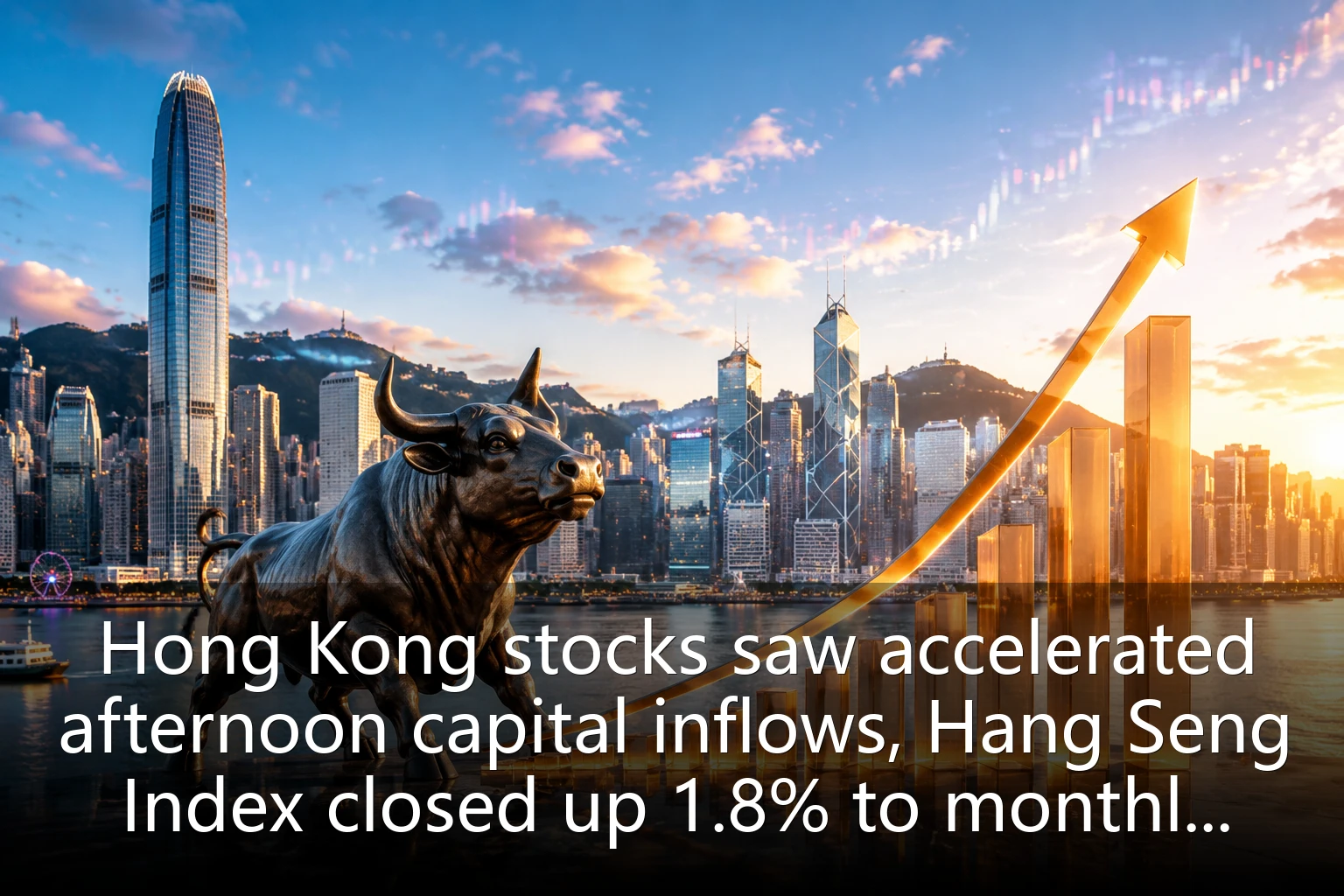
On July 30, 2026, Hong Kong stocks saw significant incremental capital inflows in the afternoon. The Hang Seng Index rose sharply driven by tech and financial stocks, closing at 22,580 points, up 1.8%, hitting a new monthly high. Market analysts attribute today's rally to increased expectations of mainland economic recovery, warming expectations of overseas liquidity easing, and positive earnings reports from some heavyweight stocks.
Afternoon capital inflows accelerate, Southbound net buying exceeds HK$8 billion
Hong Kong stocks traded narrowly in the morning but saw capital inflows accelerate significantly in the afternoon. As of close, Shanghai-HK Stock Connect recorded net buying of HK$4.52 billion, and Shenzhen-HK Stock Connect net buying of HK$3.58 billion, totaling southbound net buying of HK$8.1 billion. Among them, Tencent Holdings (00700.HK) received net buying of HK$1.25 billion, and Meituan (03690.HK) received HK$0.87 billion, with the two heavyweight stocks contributing significantly to the index.
In terms of overall capital flows, southbound funds have recorded net buying for the 8th consecutive trading day, with cumulative net inflows exceeding HK$50 billion. Industry insiders pointed out that the recent stabilization of the RMB exchange rate and favorable policy signals from the mainland have continued to increase attention on Hong Kong stocks as a valuation low.
Tech leaders lead gains, Tencent and Meituan hit new highs for the period
Today the Hang Seng Tech Index performed strongly, closing up 2.6%. Tencent Holdings saw its all-day turnover exceed HK$15 billion, with shares rising 3.2% to close at HK$425, hitting a three-month high. Meituan rose 2.8%, boosted by news of its local services business exceeding expectations in Q2. In addition, Alibaba (09988.HK) rose 1.9% and JD.com (09618.HK) rose 2.1%.
The telecom sector also strengthened collectively, with China Mobile (00941.HK) up 2.4% and China Unicom (00762.HK) up 1.7%. A brokerage report noted that accelerating 5G-A commercialization and cloud computing business growth provide room for valuation repair for operators.
Sector rotation: consumption and financials follow gains, healthcare stocks pull back
Driven by tech stocks, consumer and financial sectors also followed with gains. China Resources Beer (00291.HK) rose 3.1%, Mengniu Dairy (02319.HK) rose 2.5%, reflecting rising expectations of consumption recovery. Among financial stocks, AIA Group (01299.HK) rose 1.9%, HSBC Holdings (00005.HK) rose 1.3%, benefiting from expectations of widening interest spreads and asset quality improvement.
However, the previously strong healthcare sector saw a pullback today, with the Hang Seng Healthcare Index down 0.8%. Among them, WuXi Biologics (02269.HK) fell 2.1%, and Innovent Biologics (01801.HK) fell 1.5%. Analysts believe that healthcare stocks had accumulated large gains earlier, and short-term profit-taking pressure has emerged, but the medium-to-long-term logic of innovative drugs remains unchanged.
Outlook: Focus on volume sustainability and overseas risks
Although market sentiment improved today, investors still need to watch the sustainability of volumes. Today's main board turnover was HK$165 billion, up from yesterday, but still far from the HK$200 billion level of "bull market volume." In addition, in terms of external markets, the upcoming Fed interest rate decision and the US tech earnings season could still cause volatility for Hong Kong stocks.
Everbright Securities International strategist said: "Hong Kong stock valuations are at historical lows, with both liquidity and policy factors leaning positive, but in the short term, investors should be wary of the risk of downward earnings revisions. It is recommended to focus on sectors benefiting from the AI wave and consumption recovery, while also noting the defensive value of high-dividend stocks."
Overall, Hong Kong stocks showed a strong performance today driven by both domestic and external factors, with market confidence somewhat restored. Whether the rally can continue depends on sustained capital inflows and further policy catalysts.