At the beginning of October, the Hong Kong stock market has shown obvious sector rotation characteristics, with accelerated capital flow between different industries, and the market structure is undergoing profound adjustments. As an important global financial center, the sector rotation of the Hong Kong stock market not only reflects the pace of mainland China's economic transformation, but also reveals new trends in global capital flows. This article will conduct an in-depth analysis of the sector rotation pattern of the Hong Kong stock market in October, explore the driving factors behind it, and provide corresponding investment strategy suggestions for investors.
\n\nNew Pattern of Hong Kong Stock Market in October
\n\nSince entering October, the Hong Kong stock market has shown an overall trend of fluctuating upward, with the Hang Seng Index repeatedly consolidating around the 24,000-point mark. However, the stability of the index masks the drastic changes in the internal structure, and the phenomenon of sector rotation is particularly obvious. Major sectors such as technology, new energy, consumption, and finance have shown obvious rotation characteristics, with rapid capital flow between different industries and frequent switching of market hotspots.
\n\nLooking at historical data, October has always been a period of accelerated sector rotation in the Hong Kong stock market. On the one hand, the end of the third quarter earnings season has led to market re-evaluation of industry fundamentals, driving capital reallocation; on the other hand, changes in fourth-quarter economic data and policy expectations have also intensified the differentiation between sectors. This October is particularly special, with changes in the global macroeconomic environment, geopolitical factors, and adjustments in industrial policies jointly forming the complex background of sector rotation.
\n\nOverall Market Performance
\n\nAs of the first week of October, the Hang Seng Index has risen by about 2.3% cumulatively, but sector performance varies significantly. The technology sector has performed prominently, with the Hang Seng Technology Index rising by more than 5%, becoming the main force leading the market; while traditional financial sectors have been relatively weak, with gains of less than 1%. This differentiated pattern reflects that market expectations for economic transformation and industrial upgrading are being strengthened.
\n\nIt is worth noting that southbound capital has shown a continuous net inflow trend in October, with a cumulative net purchase amount exceeding 20 billion Hong Kong dollars, showing that mainland investors' confidence in the Hong Kong stock market is recovering. Capital flow data shows that technology and new energy sectors are the key directions for southbound capital allocation, which is highly consistent with the direction of market sector rotation.
\n\nAnalysis of Main Sector Rotation
\n\nTechnology Sector: AI and Semiconductors Driving Together
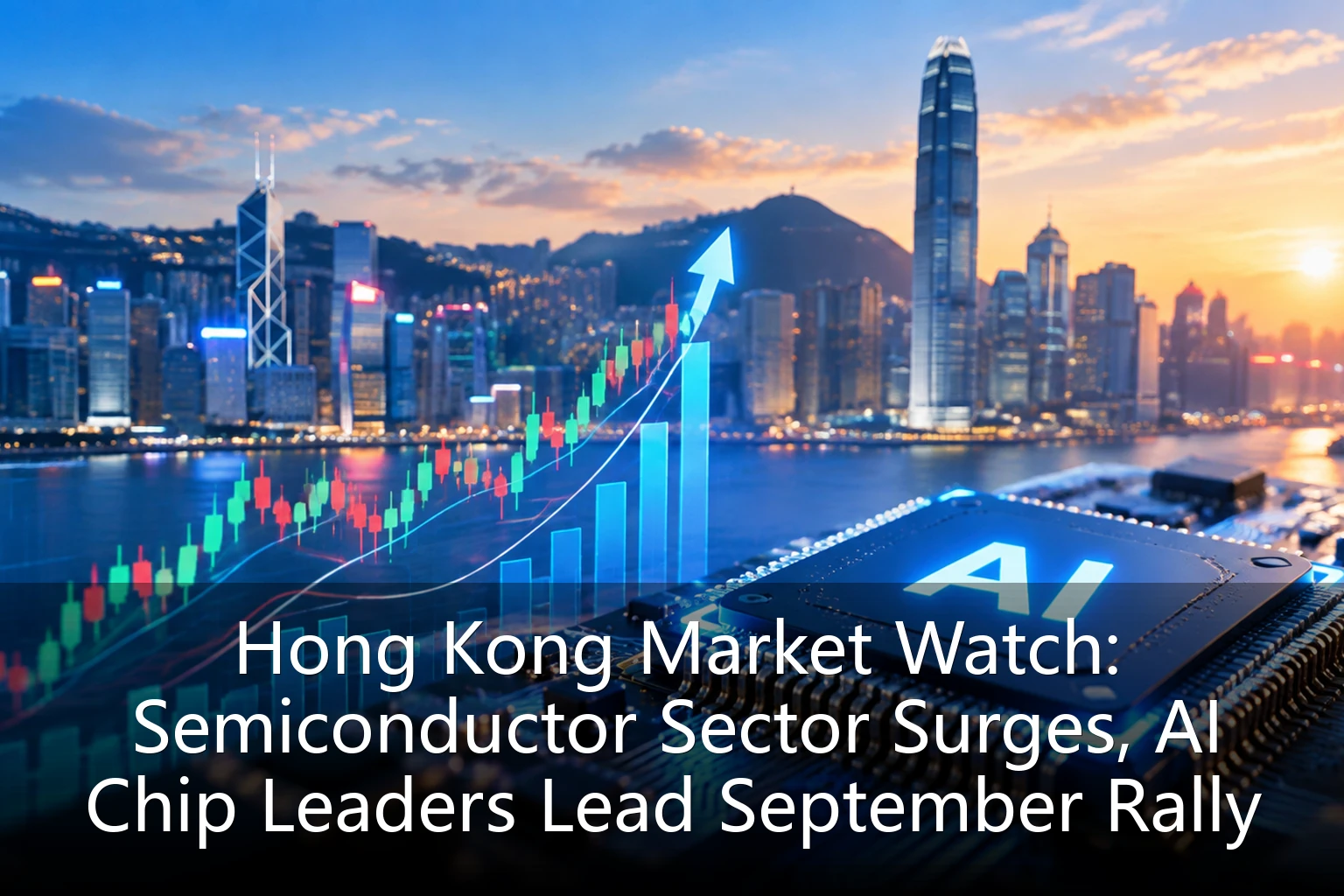
\n\nThe technology sector is the brightest star in the Hong Kong stock market in October, with artificial intelligence and semiconductors performing particularly prominently. As the global AI industry enters the stage of commercial application, AI-related enterprises in the Hong Kong stock market have received a dual drive of valuation recovery and performance growth. Large technology giants such as Tencent and Alibaba have seen their stock prices continue to rise due to their layout in the AI field; while small and medium-sized enterprises focusing on AI chips and computing infrastructure have received capital favor.
\n\nThe semiconductor sector has also performed impressively. Affected by the dual impact of global semiconductor cycle recovery and industrial chain restructuring, Hong Kong semiconductor companies have experienced a wave of rising prices. Especially those enterprises with core competitiveness in advanced processes, design tools, and packaging testing have obtained excess returns. Market analysts point out that the rise of the semiconductor sector not only reflects the improvement of industry fundamentals, but also reflects investors' long-term optimism about the strategy of technological self-reliance and controllability.
\n\nNew Energy Sector: Policy and Export Dual Benefits
\n\nThe new energy sector has shown structural differentiation in October. The new energy vehicle industry chain as a whole has performed strongly, especially battery technology and charging facility-related enterprises, benefiting from the dual benefits of domestic policy support and overseas market expansion. Data shows that since October, the Hong Kong new energy vehicle sector has risen by more than 4%, outperforming the overall market performance.
\n\nIn contrast, traditional photovoltaic and wind power sectors face certain adjustment pressures. On the one hand, the problem of global overcapacity still exists; on the other hand, accelerated technological iteration has also intensified industry competition. However, those enterprises with leading advantages in technological innovation and cost control have still received capital favor.
\n\nConsumer Sector: Domestic Demand Recovery and Consumption Upgrade
\n\nThe consumer sector has shown a trend of mild recovery in October. With the gradual improvement of the domestic consumption environment, the performance expectations of consumer leading enterprises have been raised. Especially in the fields of food and beverage, home appliances, and retail, those enterprises that can grasp the trend of consumption upgrade have performed relatively well.
\n\nIt is worth noting that the consumer electronics sector has shown obvious capital inflow signs in October. With the approach of the global electronics consumption season and the rise of the AIoT (Artificial Intelligence of Things) concept, the consumer electronics industry chain has received the opportunity of valuation recovery. Market analysts point out that the rise of the consumer electronics sector not only reflects short-term seasonal factors, but also reflects investors' long-term optimism about the integration trend of technology and consumption.
\n\nFinancial Sector: Valuation Recovery and Business Transformation
\n\nThe financial sector has performed relatively flat in October, but the internal structure is changing. Large bank stocks have performed weakly due to the impact of narrowing net interest margins and asset quality pressure; while those financial institutions that can grasp new business opportunities such as wealth management and financial technology have obtained better market performance.
\n\nThe insurance sector has shown structural opportunities in October. With changes in the interest rate environment and improvement in residents' awareness of protection, those insurance companies that can provide differentiated products and high-quality services have received capital favor. Market analysts point out that the rise of the insurance sector not only reflects short-term performance improvements, but also reflects investors' re-evaluation of the long-term value of the industry.
\n\nDriving Factors Behind Sector Rotation
\n\nChanges in Macroeconomic Environment
\n\nChanges in the macroeconomic environment are important factors driving the sector rotation of the Hong Kong stock market. Since October, economic data from major global economies have shown a differentiated situation, with the US economy maintaining resilience, while the Eurozone and Japan face the pressure of growth slowdown. This differentiated situation has led to the reallocation of global capital between different markets, which in turn has affected the sector rotation of the Hong Kong stock market.
\n\nFrom a domestic perspective, third-quarter economic data shows that the momentum of economic recovery has strengthened, especially the performance of consumption and services exceeded expectations. This improvement in economic fundamentals has provided a solid foundation for the sector rotation of the Hong Kong stock market, especially those cyclical sectors that benefit from economic recovery, such as consumption and industry, have received capital support.
\n\nIndustrial Policy Adjustments
\n\nAdjustments in industrial policies are also important factors driving the sector rotation of the Hong Kong stock market. Since October, the mainland has introduced a series of policy measures to support technological innovation, green development, and consumption upgrading. The introduction of these policies has had differentiated impacts on different industries, which in turn has promoted the rotation of market sectors.
\n\nEspecially in the technology field, the country's support for key technologies such as artificial intelligence and semiconductors has been strengthened, and related enterprises have received policy dividends and capital support, promoting the overall performance of the sector. In the new energy field, with the advancement of the "dual carbon" goal, the policy environment of the new energy industry chain continues to be optimized, providing long-term development opportunities for related enterprises.
\n\nChanges in Global Liquidity
\n\nChanges in global liquidity have had a profound impact on the sector rotation of the Hong Kong stock market. Since October, the Fed's interest rate hike cycle is approaching its end, and the global liquidity environment is becoming loose. This change in the liquidity environment has reduced the financing costs of emerging markets, which is conducive to the overall performance of the Hong Kong stock market, especially those growth-sensitive sectors such as technology and new energy have received capital support.
\n\nAt the same time, changes in global geopolitical factors have also affected the pattern of capital flows. With the phased easing of Sino-US relations and the advancement of global supply chain restructuring, those enterprises with global competitiveness and industrial chain advantages have received capital favor, promoting the performance of related sectors.
\n\nInvestment Strategy Recommendations
\n\nGrasping the Rhythm of Sector Rotation
\n\nFacing the accelerated pattern of sector rotation in the Hong Kong stock market, investors need to flexibly adjust investment strategies and grasp the rhythm of sector rotation. Specifically, you can pay attention to the following aspects of opportunities:
\n\n- \n
- Technology sector: Focus on leading enterprises in the fields of AI and semiconductors, as well as those enterprises with leading advantages in technological innovation and business models. \n
- New energy sector: Focus on core technology and key component enterprises in the new energy vehicle industry chain, as well as those enterprises with advantages in overseas market expansion. \n
- Consumer sector: Focus on leading enterprises under the trend of consumption upgrade, especially those with brand advantages in the fields of food and beverage, home appliances, and retail. \n
- Financial sector: Focus on financial institutions that can grasp new business opportunities such as wealth management and financial technology, as well as high-quality enterprises in the insurance sector. \n
Controlling Risks and Diversifying Investments
\n\nWhile grasping the opportunities of sector rotation, investors also need to pay attention to controlling risks and avoiding over-concentrated investments. Specifically, the following strategies can be adopted:
\n\n- \n
- Diversified investment: The correlation between different sectors is low, and portfolio risks can be effectively reduced through diversified investment. \n
- Regular adjustment: Adjust the investment portfolio regularly according to market changes and sector rotation conditions, maintaining the dynamic balance of the portfolio. \n
- Take profit and stop loss: Set reasonable take profit and stop loss points to avoid large losses due to market fluctuations. \n
- Long-term investment: For high-quality enterprises with long-term growth potential, a long-term holding strategy can be adopted to avoid the impact of short-term market fluctuations. \n
Paying Attention to Southbound Capital Flows
\n\nSouthbound capital is an important participant in the Hong Kong stock market, and its flow often indicates the direction of market sector rotation. Investors can closely follow the changes in southbound capital flows, especially the allocation situation of popular sectors such as technology and new energy, as an important reference for investment decisions.
\n\nData shows that southbound capital has continued to net inflow into the Hong Kong stock market in October, with a focus on technology and new energy sectors. This capital flow pattern is highly consistent with the direction of market sector rotation, providing valuable reference information for investors.
\n\nRisk Warnings and Future Outlook
\n\nMain Risk Factors
\n\nAlthough the Hong Kong stock market performed well overall in October, it still faces some risk factors, and investors need to remain vigilant:
\n\n- \n
- Global economic slowdown: A slowdown in global economic growth may affect corporate profits and investor confidence, thereby negatively affecting the Hong Kong stock market. \n
- Geopolitical risks: The escalation of geopolitical tensions may lead to increased market volatility, especially for those enterprises with global business. \n
- Policy changes: Changes in the domestic policy environment may have differentiated impacts on different industries, leading to accelerated sector rotation. \n
- Liquidity risk: Changes in the global liquidity environment may have a significant impact on the Hong Kong stock market, especially on those interest rate-sensitive sectors. \n
Future Outlook
\n\nLooking ahead, the sector rotation of the Hong Kong stock market will continue, and investors need to closely follow changes in the following aspects:
\n\n- \n
- Economic data: Changes in domestic economic data will directly affect market expectations for different industries, thereby promoting sector rotation. \n
- Policy environment: Changes in the domestic policy environment, especially the support for technological innovation, green development, and consumption upgrading, will affect the performance of related sectors. \n
- Global liquidity: Changes in the global liquidity environment will affect the overall valuation of the Hong Kong stock market, especially for growth sectors. \n
- Geopolitics: Changes in geopolitical factors will affect the pattern of global capital flows, thereby affecting the sector rotation of the Hong Kong stock market. \n
Overall, the Hong Kong stock market in October has shown obvious sector rotation characteristics, with differentiated performance in major sectors such as technology, new energy, consumption, and finance. Investors need to grasp the rhythm of sector rotation, flexibly adjust investment strategies, and grasp structural opportunities while controlling risks. With changes in the global economic environment and the advancement of domestic economic transformation, the sector rotation of the Hong Kong stock market will continue, and investors need to closely follow market changes and adjust investment strategies in a timely manner.
\n\nAs an important global financial center, the sector rotation of the Hong Kong stock market not only reflects the pace of mainland China's economic transformation, but also reveals new trends in global capital flows. In the new market environment, investors need to pay more attention to changes in industry fundamentals, grasp the rhythm of sector rotation, and grasp structural opportunities while controlling risks. Only in this way can long-term stable investment returns be obtained in a complex and changing market environment.